
Colliding with the Past: When Benjamin Meets Deacon Again

After more than a decade apart, Benjamin Kensington returns to his family estate—only to come face-to-face with the one man he never truly let go of. In this long-overdue reunion, old tensions and undeniable chemistry simmer beneath the surface as Benjamin and Deacon Langford meet again in the dusty confines of the Kensington barn. But with history between them as weathered as the estate itself, will they find common ground… or just reopen old wounds?

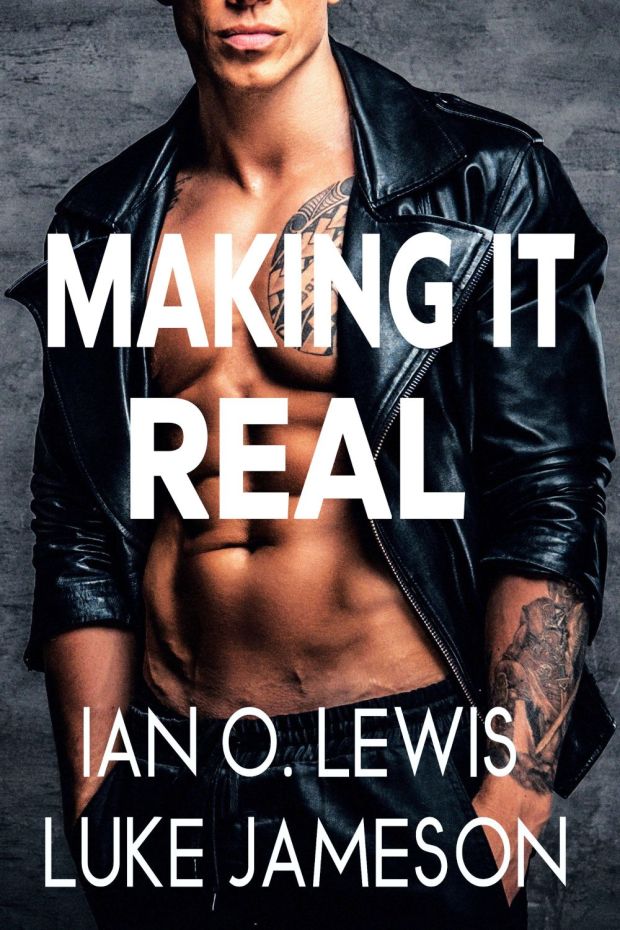
Read on for Chapter 3 of Making It Real, where the past and present collide in the most unexpected way.
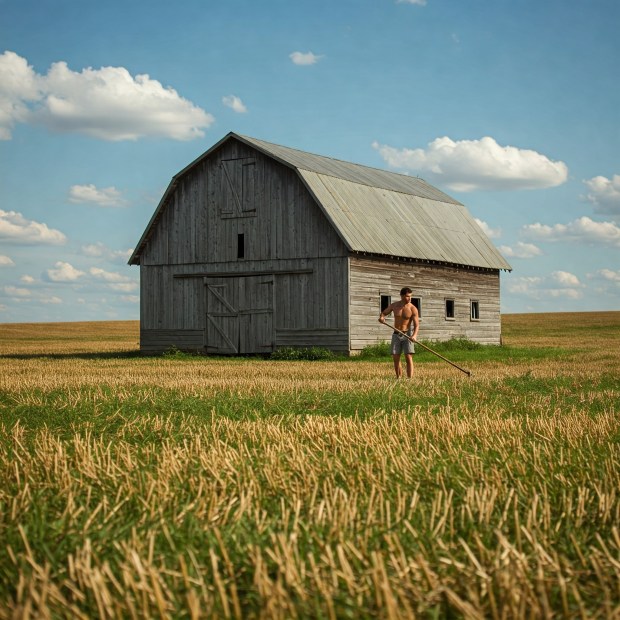
The late afternoon sun stretched long golden fingers across the fields, the tall grass swaying like waves on a restless sea. The scent of honeysuckle and warm earth filled the air, wrapping around me in a way that felt almost too familiar. Too intimate.

I walked beside my mother, our steps crunching softly over the dirt path that led toward the barn. She talked a mile a minute, her voice light and lilting, as if I’d only been gone a few months instead of more than a decade.

“I just can’t tell you how pleased I am to have you back, Benji,” she said, looping her arm through mine. “Even if it’s just for a little while.”

I gave her a sideways glance. “You make it sound like I was lost at sea.”

“Well, weren’t you? New York, all that hustle and bustle—Lord knows I don’t understand how anyone could live in a city like that.” She patted my arm. “I always knew you’d come home, though. Kensington men always do.”

I swallowed. She hadn’t asked me about my being fired, and I wasn’t ready to talk about it. Not yet.

Instead, I let her chatter on about the latest local news—the Hansons’ dog finally had her puppies, some new bakery had opened up on Route 33, and Lord help us all, Lucille Montgomery had been in three car accidents over the past year. Mom wondered when they’d take her license away.

I nodded along, but my attention was elsewhere.

For the first time, I really looked at my mother.

She was still the formidable Maggie Kensington, with her perfectly styled hair and that air of effortless Southern charm, but there were new lines around her eyes, a certain tiredness in the way she moved. When had she started looking… older?

Something uneasy settled in my chest. Maybe it really was time to come home.

Not permanently, of course. Just long enough to make sure she was okay.

We rounded the bend, and the barn came into view.

I nearly stopped in my tracks.

The old place looked like hell.

The once-bright red paint had long since faded to a tired, splintered gray. The roof sagged in places, and I didn’t even want to think about the condition of the inside.

Mom let out a sigh, shaking her head. “Lord, it needs work.”

That was putting it mildly.

She gave me a sideways glance. “You remember how beautiful it used to be?”

I did. I remembered everything.

Sneaking in here as kids, building forts in the loft, whispering secrets in the dark. And later—much later—stealing away to this very barn in the heat of summer, pressing Deacon against the rough wooden beams, feeling the solid strength of him beneath my hands, tasting sweat and salt and something sweeter than anything New York had ever offered me.

I swallowed hard.

Deacon.

Jesus. What if I saw him while I was here?

Would he still hate me? Probably.

I deserved it.

I’d spent years trying not to think about how I’d treated him. The cruel words I’d said. About the way I’d tried to shape him into someone he wasn’t, someone who would fit neatly into the polished future I’d imagined for myself.

But he’d been right.

He wasn’t meant for skyscrapers and boardrooms. His destiny was this land, the fields, and the sun on his skin.

And God help me, I’d never felt as safe, as seen, as whole as I had when I was with him.

Mom gave my arm a little squeeze. “Come on, let’s look inside.”

I took a breath and followed her into the dim interior, expecting dust and disrepair.

What I wasn’t expecting was him.

Deacon stood in the middle of the barn, shirt in hand, his tanned skin gleaming with a light sheen of sweat. He looked like something out of a damned painting, the afternoon sun cutting through the slats in golden beams, lighting him up like a statue of a god—earthy and strong, carved from muscle and memory.

My breath caught in my throat.

Deacon’s eyes locked onto mine, and for a moment, time folded in on itself.

I wasn’t Benjamin Kensington, the man who’d clawed his way up the corporate ladder. I wasn’t the guy who had just lost everything.

I was eighteen again.

I was standing in this barn, my hands buried in Deacon’s hair, my lips pressed to his, the world outside falling away.

Heat crawled up my neck, and I realized, with no small amount of horror, that I was blushing.

Mom clapped her hands together, oblivious to the tension that had sucked all the air out of the barn.

“Well, now! Isn’t this just perfect?” she said, beaming between us. “The two of you, back together, just like old times.”

Not exactly, Mother.

She turned to me with a wide smile. “You know, Deacon’s been helping me out around here for years. I was just saying how much this place needs work—wouldn’t it be wonderful if you two worked on it together? Just imagine it, Benji! The two of you, bringing the estate back to its former glory.”

Her voice was light, hopeful.

Deacon’s face was unreadable.

And me?

I was wondering how the hell I was supposed to survive this.

Mom kept talking, her voice bright with excitement, but I wasn’t listening.

I couldn’t.

Deacon’s gaze locked onto mine, and for the life of me, I couldn’t look away.

Those eyes—icy blue, sharp as ever, even in the hazy light filtering through the barn. When we were younger, I used to swear they could see right through me, past all the charm and bravado, straight to the things I didn’t dare admit.
Now?

Now they held me in place like a snare.

The golden shafts of afternoon light caught the flush creeping up his chest, dusting across his neck before settling high on his cheeks. He turned away first, and I exhaled, realizing I’d been holding my breath.

Was that embarrassment? Or something else?

Did he still hate me?

Or had seeing me again hit him just as hard as it had hit me?

“Benji, did you hear me?” Mom’s voice pulled me back, her perfectly manicured hands gesturing around the barn. “I said we need to find a way to make this place profitable again.”

“Hmm?” I asked, still too caught up in Deacon’s presence to register the question.

Deacon shifted, rolling his shoulders, then cleared his throat.

“It’s good to see you, Benjamin.” His voice was low, rough around the edges, like he hadn’t spoken much today. Maybe he hadn’t.

That flush from before deepened across his throat, and something tightened low in my stomach.

I opened my mouth, but before I could respond, Mom jumped in again.

“Benji, I asked how we can make Kensington House profitable. Property taxes are going up, but there’s next to no revenue coming in.”

I blinked at her, barely processing the question. My mind was still stuck on Deacon, on the way his voice had brushed against my skin like a whisper of a touch.

Mom huffed, impatience creeping into her tone.

“Well?”

I rubbed my temples, sighing. “Maybe we’d be better off selling it to someone who actually cares about it.”

The words had barely left my mouth before I realized my mistake.

Mom’s eyebrows shot skyward. Deacon frowned, jaw tightening as his eyes darkened.

The air in the barn shifted.

Mom placed a hand on her hip. “Benjamin Kensington, I cannot believe you just said that.”

“Mom—”

“This land has been in our family for generations.” She waved an arm toward the open barn doors. “Do you have any idea how much history is here? Your grandfather, your great-grandfather, every ancestor before them—they worked this land, they built this home, and you think selling it is the answer?”

I sighed again, this time heavier. “I’m just saying—”

“No.”

The word came from Deacon.

I turned toward him, surprised by the sharp edge in his tone.

“You never change,” he muttered, shaking his head. “You never gave a damn about this place. Benjamin, you’re lucky to have it, and you can’t even see that.”

A prickle of irritation worked its way up my spine.

“That’s not fair,” I said, leveling him with a look. “It’s easy for you to say that. You stayed.”

“Yeah,” Deacon said, eyes flashing. “I did.”

The weight of what he wasn’t saying settled between us.

I left home and never looked back.

Until now.

I sighed, trying to smooth things over. “Look, I didn’t mean—”

“Enough of that,” Mom interrupted, waving a hand as if physically dismissing the tension. “I asked you here to talk about solutions, not start up old arguments.”

Deacon exhaled through his nose, but kept quiet.

Mom turned to him, a hopeful smile on her face. “Deacon, I’d like to hire you to work on the estate. We can start with the barn—it needs more work than anything.”

Deacon’s posture relaxed slightly, his gaze shifting toward the exposed beams above us.

She continued, “And another thing—what about all that old farm equipment we don’t use? I was thinking we could sell some of it.”

Deacon finally turned, his eyes scanning the far corner of the barn. My gaze followed his, landing on a hulking piece of rust-covered machinery. I didn’t know what it was, but I could tell by the look on his face that he did.

Slowly, he faced Mom again, and for the first time since we’d walked in, he smiled.

A genuine smile.

Soft. Familiar. The kind that made my stomach tighten for reasons I didn’t want to think about.

Instead of answering immediately, he walked over to the piece of equipment, running a hand along the corroded metal. Then he turned back to Mom.

“How about this?” he said. “Instead of paying me money, I’ll work in exchange for some of this old equipment.”

Mom’s face lit up. “That’s a fine idea! Lord knows we don’t need half the things stored in this barn.”

“Deal,” Deacon said, giving her a small nod.

Mother clasped her hands together, positively beaming. “Oh, Deacon, this is just wonderful! With your help, we’ll have this place looking like it should again.”

Deacon gave her a small nod, but his expression was careful, guarded. His fingers trailed along the rusted edge of the old farm equipment, his focus seemingly on anything but me.

Then Mother turned in my direction, her keen eyes narrowing.

“And you,” she said, pointing a manicured finger in my direction. “You’re going to help.”

I blinked. “What?”

“You heard me, Benji. Deacon can’t do all this by himself.”

Deacon shifted beside me. I caught the way his throat worked as he swallowed, a fresh blush creeping up his neck. He hesitated before muttering, “Let Benjamin handle the business side of things. I can take care of—”

“Oh, nonsense,” Mother interrupted, waving off his protest. “Benji needs to get his hands dirty again. He needs to understand how lucky he is to have this place.”

I exhaled through my nose, resisting the urge to roll my eyes. “Mom—”

She wasn’t finished. “And besides, I remember how happy you boys used to be, working out here together.”

My stomach twisted at that.

She stepped away from us, walking toward the hulking old tractor in the corner. It was ancient, covered in dust and rust, but I could still picture it as it once was—faded red, chugging along the fields under the hot Virginia sun.

Mother ran her fingers over the worn metal, then turned back with a smile. “I’ll never forget the sight of you two on this thing. Deacon, bush hogging the pastures, Benji perched behind you, hanging on for dear life.” She laughed, a soft, nostalgic sound. “You two had the best time, always laughing.”

Deacon’s shoulders tensed, and for the briefest moment, something flickered in his expression—something tight and unreadable.

I swallowed, suddenly too aware of how still the barn had become. The only sounds were the faint creak of the rafters and the distant chirping of cicadas.

Then, just as quickly as it came, whatever crossed Deacon’s mind disappeared behind a careful mask. His lips twitched into a small, tight smile.

“I’ll do whatever you want, Miss Maggie.”

A strange feeling settled in my chest—something close to relief.

Deacon grabbed his shirt from where it had been hanging, shaking out the fabric before pulling it over his head. The sweat on his skin made it cling to his torso for a moment, outlining the shape of him before he tugged it into place.

I should’ve looked away.

But I didn’t.

“Benji?” Mother’s voice jolted me from my thoughts. “Are you going to pitch in too?”


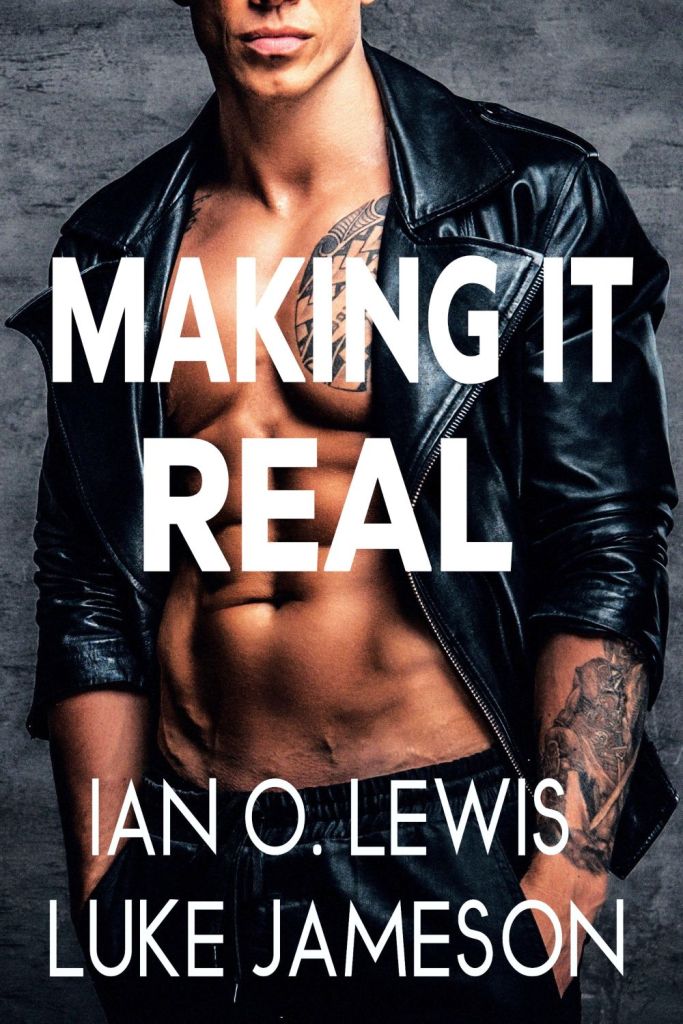
Making It Real publishes on February 26, 2025. It is available for a discounted preorder price of 2.99 for the ebook, and on release day the price goes up to 3.99, so lock in the lower price now by preordering the book from your favorite online retailer. It’s available on Amazon, Apple Books, Google Play, Kobo, Nook, and Smashwords.

Interview with Benjamin Kensington: Ambition, Redemption, and the Weight of Legacy

Today, we’re sitting down with Benjamin Kensington, a man whose life has been a whirlwind of ambition, love, and self-discovery. From the bustling financial world of New York City to the crumbling halls of his family estate in Montpelier, Virginia, Benjamin’s story is one of transformation, redemption, and wrestling with his own identity.


Interviewer: Benjamin, thank you for joining us today. Let’s start with your return to Montpelier. What’s it like being back at Kensington House after all these years?

Benjamin: It’s… complicated, to say the least. Kensington House is home, but it’s also a reminder of everything I wanted to escape. Coming back has stirred up emotions I thought I’d buried—nostalgia, guilt, pride… and a lot of regret. The house is in shambles, which, in some ways, feels like a metaphor for my life right now.


Interviewer: That’s an interesting comparison. The estate represents your family’s legacy, but it sounds like it also weighs heavily on you. What does Kensington House mean to you?

Benjamin: Growing up, it was a symbol of privilege, but also of obligation. My mother always emphasized the importance of preserving the estate and our family’s name. But I was young, restless, and ambitious. I didn’t want to spend my life fixing old staircases and hosting charity tours. Now, I see the house differently. It’s more than bricks and mortar—it’s history, memories, and potential. Saving it feels less like a burden and more like an opportunity to redeem myself.

Interviewer: Speaking of redemption, your return has also brought you face-to-face with Deacon. How has it been seeing him again after all this time?

Benjamin: (Pauses) Seeing Deacon has been… difficult and wonderful all at once. He’s everything I remember—steadfast, kind, and frustratingly grounded. I know I hurt him when I left, and I regret it every day. He represents a life I could’ve had if I’d made different choices. Being around him again reminds me of what I’ve lost, but also what I might still have, if I’m lucky.


Interviewer: It sounds like Deacon has had a profound impact on you. What do you think is the biggest obstacle between the two of you now?

Benjamin: Trust. I broke it when I chose my career over him, and I can’t blame him for being wary now. I’ve spent so much of my life chasing status and wealth, and I think Deacon sees me as someone who only cares about the surface of things. Proving to him—and to myself—that I’m capable of more is the hardest challenge I’ve ever faced.


Interviewer: Shifting gears a bit, let’s talk about your career. You’ve mentioned how important ambition was to you in the past. Do you still see yourself returning to the world of finance?

Benjamin: Ambition has always been a driving force for me, but I’ve started questioning what that word really means. Does it mean climbing the corporate ladder, or does it mean building something meaningful that lasts? For now, I’m focused on restoring Kensington House. Whether that means turning it into a wedding venue, a museum, or something else entirely, I’m determined to make it a success.


Interviewer: That’s a big shift from the fast-paced world of New York City. How has your time back in Montpelier changed your perspective?

Benjamin: It’s been humbling, honestly. In New York, everything was about appearances—how much you made, what you wore, who you knew. Here, none of that matters. What matters is community, relationships, and legacy. I’ve had to confront parts of myself I didn’t like very much. It’s been uncomfortable, but also necessary.


Interviewer: You’ve mentioned legacy a few times now. What does it mean to you, and how does it play into your current journey?

Benjamin: Legacy used to mean power and prestige—carrying on the Kensington name in a way that turned heads. Now, it’s more about connection. It’s about honoring the people who came before me, like my mother, and creating something worthwhile for the future. Restoring Kensington House isn’t just about the building; it’s about proving to myself and others that I can leave something good behind.


Interviewer: It sounds like you’re on a path of transformation. If you could go back in time and tell your younger self one thing, what would it be?

Benjamin: I’d tell him to slow down. To stop chasing things that only look good on paper and pay more attention to the people who truly matter. Ambition isn’t inherently bad, but when it blinds you to love and authenticity, it can destroy you.


Interviewer: That’s beautifully said. Last question—what do you hope for your future?

Benjamin: I hope to find balance. I want to build a life that honors both my ambition and my heart. Whether that means rebuilding Kensington House, rekindling my relationship with Deacon, or simply finding peace with myself, I just want to be proud of the man I’ve become.


Interviewer: Thank you, Benjamin. Your honesty and vulnerability are inspiring. We wish you the best as you navigate this new chapter of your life.

Benjamin: Thank you. It’s not easy, but I’m learning that the hardest paths are often the most rewarding.


Making It Real publishes on February 26, 2025. It’s available on Amazon, Apple Books, Google Play, Kobo, Nook, and Smashwords. Preorder your copy today for the low price of 2.99. On the day it publishes the price goes up to 3.99, so reserve your copy today and save!

Where Do I Get My Ideas for Novels?

One of the questions I’m asked most often as a writer is: Where do you come up with your ideas? The truth is, inspiration strikes me on a daily basis. Sometimes, it’s in the middle of my morning walk when I’m surrounded by the rhythm of everyday life. People going about their day, snippets of conversation, the way someone carries themselves—all of it sparks my imagination. For instance, there’s a handsome guy with a cute dog who owns a bicycle shop that I pass every morning. Naturally, he’s going to find his way into a book someday. Plot bunnies, as I like to call them, are everywhere.

But it’s not just strangers or random moments that inspire me. Many of my ideas come from my own life experiences. It’s these stories, memories, and even challenges that help me create characters and plots that feel authentic. For all of you who want to be writers, I recommend keeping a journal so you can refer to your prior experiences. Let me take you on a journey through some of those experiences and how they’ve shaped my writing.

Writing What I Know: The Arts, Makeup, and Latinx Culture

When I was younger, I had my heart set on becoming a concert pianist. I was steeped in classical music, not just as a pianist but also playing brass instruments and guitar. If you wanted the perfect example of a geeky kid who loved going to the symphony, I’d be the zitty teen face on a poster. While life took me in a different direction, that passion for music never left me. It’s no surprise that I’ve written several novels about musicians. In Mr. Mouthful, a symphony conductor falls in love with a cellist who owns a coffee shop. The Boundary tells the story of an opera singer falling in love with his makeup artist, and The Big Time explores the journey of an up-and-coming pop star. Music has always been a deep well of inspiration for me.

Later, my artistic path led me to the world of beauty. I became a professional makeup artist and had the honor of working for Bobbi Brown Cosmetics, opening the very first Bobbi Brown studio and retail store in the United States. Working with Bobbi was totally amazing! My experiences there helped me shape the love interest in The Boundary, adding layers of authenticity to a story about ambition and artistry.

And then, there’s my personal life. I’ve spent many years living in Mexico and was in a 23-year relationship with my former partner Ricardo, who was Mexican-American. This immersion in Latinx culture has naturally found its way into my writing. For instance, The Big One, and Electric feature characters with rich, Latinx backstories. Writers often hear the advice to “write what you know,” and for me, that’s proven to be invaluable.

The Birth of The Money Shot

The novel I’m currently polishing up, The Money Shot, came from a very different kind of inspiration. I’m not going to lie: I was casually perusing porn on Reddit (research, obviously!), and I noticed a growing trend. Many of the guys posting nudes and videos were linking to their OnlyFans pages. That sparked an idea. What if I wrote a story about someone turning to OnlyFans out of financial desperation? Enter Liam and Jack, two roommates navigating this uncharted territory, all while falling in love.

While developing the plot, I found myself binge-watching The Nanny on YouTube. Fran Fine’s larger-than-life personality inspired Vanessa Martinez, a Latina version of Fran with her own unique flair—and let’s just say, Vanessa is a lot naughtier. She brings comic relief and a dash of chaos to The Money Shot, and she’s quickly become one of my favorite characters to write.

Open Minds, Endless Ideas

One thing I’ve learned as a writer is the importance of keeping your mind open. Inspiration can come from anywhere: a conversation, a memory, a random observation, or even something as mundane as scrolling through social media. The key is to notice the sparks and fan them into flames.

That said, I doubt I’ll ever write about something I don’t at least have a working knowledge of. For instance, I’ve never written about ice hockey or deep-sea exploration because those worlds feel too far removed from my own. But who knows? If I ever take up scuba diving or start caring about sports, maybe that’ll change.

For now, I’m content letting my past experiences and everyday observations guide me. Life is full of stories waiting to be told, and I can’t wait to see what sparks my imagination next.

Stroke of Genius- How I Create Electrifying Sex Scenes

I might have a thing for this model…

Let’s talk about sex…scenes. How do I turn up the heat on the page? Read on to find out.

Ever wondered what goes into writing those scenes that leave you hot under the collar? Today, I’m pulling back the curtain to give you a glimpse into my process for crafting steamy moments in my romance novels. 

When I first began writing fiction, I started out by writing short erotica stories under the name Enrique Cruz. At the time I was still working a dreadful day job as a dispatcher for a locksmith company. I wrote on the bus rides to and from work, on my lunch breaks, even in bars. You can only imagine what it was like writing sex scenes on a crowded bus full of people. But I was determined to make it as a writer, so I forced myself to get past the embarrassment and just did it. Save your money. The stories I wrote under the pen name Enrique Cruz were horrible. But they served the purpose of erotica: they were sexually stimulating with little regard to actual plotting and character development. 

Setting the Stage

For me, creating the perfect setting for a sex scene is essential. Whether it’s a moonlit beach, a cozy cabin, or a bustling cityscape, the location sets the mood and adds depth to the intimacy between my characters. And if they are well written, they further the romance in the most delicious ways possible.

For example, in my novella Making It Fierce, the main characters begin to have sex behind the Virginia Museum of Fine Arts, under a magnolia tree. Yes, outdoor sex is fabulous, but normally most sex scenes begin and end in a bedroom. I had the MCs begin the sex outside as a means of showing how passionate they were feeling about each other, then they rushed home to the safety of Lucas’s apartment, and Elijah lost his virginity. 

Why is Elijah’s virginity so important? Read on to find out.

Character Chemistry

 But it’s not just about the setting—it’s about the chemistry between the characters. Before I even think about writing a sex scene, I spend time developing my characters’ relationships, ensuring that their connection is palpable and their desire for each other is undeniable. 

With Elijah I wanted to show you, the reader, how intense Elijah’s emotions for Lucas were. Elijah had spent years hiding away in his grandmother’s basement because of scars on his face and scalp. He truly never thought he’d meet anyone who could see who he was on the inside. When he finally did, he made himself the most vulnerable he’d ever been, showing you how much he craved Lucas’s love.

It’s a must when writing sex scenes for your characters to have sizzling chemistry. If not, what’s the point of the romance? Nobody wants to read a sex scene that is limp from the start. Trust me on this.

Building Anticipation

One of the most thrilling aspects of writing romance is building anticipation. From flirtatious banter to stolen glances, I love creating tension that keeps readers on the edge of their seats, eagerly awaiting the moment when my characters finally give in to their desires.

In most of my novels, the main characters don’t do the nasty until they’ve developed feelings for each other. This usually means the sex takes place toward the end of a story, but that’s not always the case. In my upcoming novel Ignited, Finn and Alex are hitting the sheets on the high seas at the beginning of their love story. You’ll have to read the book to understand why I made that choice.

Emotional Connection

At the heart of every sex scene is emotion. Whether it’s longing, vulnerability, or pure passion, I strive to convey the depth of my characters’ feelings as they come together in intimate moments. I typically lean into vulnerability in sex scenes, where one or both of the MCs is making himself vulnerable to the other, and sharing part of himself he rarely does with anyone else.

Sensory Details

To bring my sex scenes to life, I rely on sensory details to immerse readers in the experience. The scent of a lover’s skin, the sound of their heartbeat, the taste of their kiss—each detail adds layers of richness to the scene.

Balancing Explicitness 

Finding the right balance between explicit detail and subtle suggestion is key. While I want my scenes to be steamy and sensual, I also want to leave room for readers’ imaginations to fill in the blanks. With that being said, if I don’t have to stop and take a, um, break, in the middle of writing a sex scene, then I know it’s not very good. You’ll have to guess what I usually do on that break…

Personal Touch

Of course, every writer has their own approach to crafting sex scenes, and mine is no exception. From my unique writing rituals to the inspirations that fuel my imagination, I bring my own personal touch to every scene I write.

Challenges and Rewards

 Writing sex scenes isn’t always easy, but the rewards are well worth the effort. There’s nothing quite like the satisfaction of creating a scene that resonates with readers on a deep, emotional level.

Conclusion

So there you have it—the secrets behind my steamy scenes. I hope this glimpse into my writing process has given you a newfound appreciation for the art of crafting romance. Until next time, happy reading!

If you haven’t signed up for my newsletter, do it now and get a free copy of my novella Making It Fit! My newsletter goes out weekly, and features all the news about my upcoming releases, sales, and fun articles like this one.