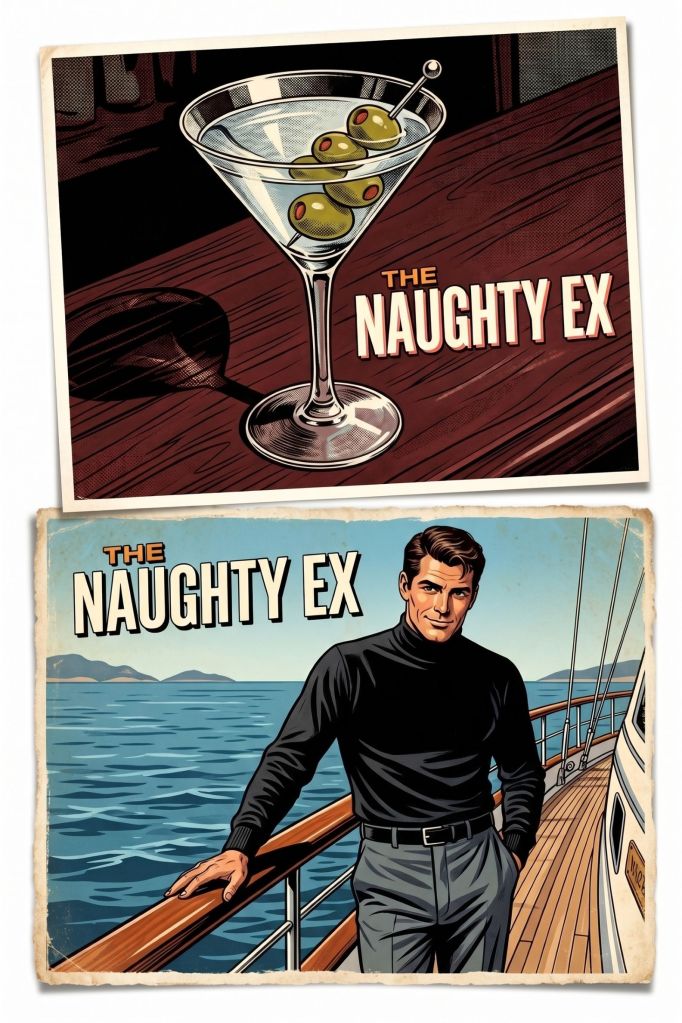
The bartender at the Hale Nui Yacht Club, a handsome older man named Kimo, knew my drink, which was either a comfort or a diagnosis, depending on how generous I was feeling about the state of my life. That afternoon I wasn’t feeling generous at all, so I decided it was a diagnosis and let him pour it anyway.
“The usual, Mr. Normand?”
“If you have to ask, we’ve both failed.”
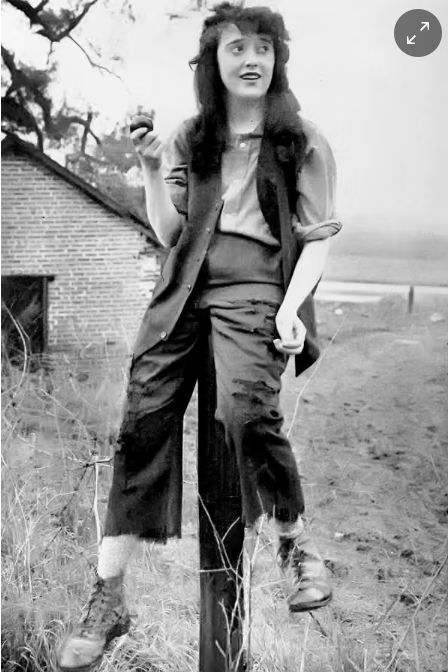
He smiled the way people smile at a man they’ve decided is charming, because the alternative — that he is simply always here — is too sad to sit with. My usual is a Martini with three olives, because two is a snack and one is a tragedy. He set it down on a napkin embossed with the club’s little gold anchor, and I turned the glass a quarter-turn so the olives faced me, the way my ancestor, silent film legend Mabel Normand, supposedly turned every mirror in every room she entered so she could catch herself being brilliant.
That’s a lie, by the way. Nobody knows if Mabel did that. But it’s the kind of thing that should be true about her, and in my family we’ve never let the absence of evidence get between us and a good story. It’s practically the family crest. A star, a camera, and a caption that isn’t quite accurate.
I turned the ring, too, without meaning to — the pearl-and-opal thing that had been on the fourth finger of my right hand since I was nineteen, when my grandmother pressed it there and said, you’re the last one who’ll know what to do with it. She had never once asked me about girls. At nineteen I took that for tact. Around thirty I understood it had been permission.
Opal catches the light in colors it has no business containing. Green, then a sudden bruised violet, then a fire that looks like it’s coming from somewhere under the stone rather than off the surface of it. Opals are thought to bring bad luck, the superstitious say. I’ve never been superstitious. But I have been unlucky, which is a different thing and requires no belief system whatsoever.
The marina spread out past the veranda in that obscene Pacific blue, a hundred million dollars of other people’s boats bobbing in the kind of sunlight they put on postcards to make the mainland feel bad about itself. Somewhere out there among them was mine — the Second Take, forty-two feet of teak and white sails, the only major purchase I’d made in two years and the only one that made sense. A boat is a house you can flee in. I’d been fleeing in it since the divorce. Slowly. In circles, mostly. You’d be amazed how far you can run without arriving anywhere.
“You’re Gregory Normand.”
I didn’t turn right away. In my experience, the correct response to being identified is to make the identifier work a little for it. Let the sentence hang, and they’ll wonder if they’ve made a mistake.
Then I turned, and — oh. He was worth turning for.
Young. That specific kind of young that hasn’t yet been disappointed by anything. Twenty-four, maybe twenty-five, in a shirt the color of the inside of a shell, open one button past what the club would have preferred. He had the sort of jaw that gets a boy flown to exotic places, and he had eyes he’d clearly been told were his best feature often enough to believe it. He’d taken the stool beside mine without asking, which I respected. And he was looking at me the way people used to look at me all the time and had, lately, stopped.
Here is the part I want on the record, because it matters later. I catalogued all of it — the shirt, the shoulders, the good faithless smile — the way you’d note a piece of set dressing that photographs well.
And I felt absolutely nothing.
“I might be,” I said. “Depends who’s asking and whether they’re litigious.”
He laughed — too easily, the laugh of a person auditioning. “I’m Dashiell.”
“Of course you are.”
Nobody is born Dashiell. Somebody becomes Dashiell, on a train platform, at seventeen, when they decide the name they were issued won’t carry them where they’re going. I knew the maneuver intimately. My own mother had done it, and her father, and somewhere back at the headwaters of all of us a girl named Mabel Fortescott had done it too. She filed the sharp corners off herself until she was smooth enough to slide into a nickelodeon and out the other side a legend. We are a family of self-inventions. It’s the family business, really, more than the movies. The movies were just where we kept the receipts.
“People call me Dash.”
“People would.”
“I know who you are,” Dash said, leaning in, conspiratorial, delighted with himself. “You produced The Darkest Hour.”
And there it was — the little internal lurch, the phantom limb. Made. Past tense. Eight years past, to be exact. Somewhere in a house in the hills there was a gold statuette I’d put into Lance Hayworth’s enormous hands on a stage in front of forty million people, and somewhere in a different house there was a man I’d handed considerably more to and gotten considerably less back. Both of those handings had happened in the same golden, ruinous year.
“I did,” I said. “In a previous life.”
“I cried.” He said it like it was a gift. “At the end. When he stands in the doorway and he doesn’t go in.”
“Everyone cries at that. That’s why we shot it eleven times.” I sipped the Martini. “The trick is you make them wait for the door. You make them so sure he’s going to walk through it that when he doesn’t, the not-walking does all the work. Withhold the thing they want and they’ll build the whole cathedral themselves, out of wanting.”
I heard myself say it and thought, distantly, the way you notice a draft: you used to believe that about people, not just about audiences. But the thought didn’t land anywhere. Nothing had landed anywhere in a while. That was the point of the boat.
Dash was still talking. He was a model — I’d have bet the Second Take on it before he said it — and he was here shooting something involving, as far as I could follow, three watches and a volcano. Then he reached into a canvas tote the size of a life raft and produced, with the flourish of a boy who has learned that objects can be personality-adjacent, a magazine.
“This is me,” he said. “It’s in Town and Country, which my agent says is a big deal. Is it a big deal?”
“It’s a big deal to the kind of people who need to be told Town and Country is a big deal,” I said, which was cruel. He didn’t catch it, which made it crueler. I took the magazine anyway, because a beautiful man was handing me something, and two years of drifting around the globe in a boat hadn’t yet killed the part of me that reaches for what’s offered. They’ll bury me and my hand will still be coming up through the dirt for something shiny.
He flipped it open across my forearm to a spread of himself on a horse he was plainly afraid of, and while he narrated I made all the right sounds. The opal on my finger threw a little violet spark across the glossy page, and I turned it — turned toward the front of the magazine, idly, past the perfume strips, the watches, the people photographed being effortless at parties. That’s where they’ve always kept the announcements. Weddings. Debuts. The small formal notices that a certain kind of American family still believes constitute a public record of joy.
I don’t know why I turned there. I’d like to tell you it was instinct, a producer’s nose for the scene, some subterranean part of me that already knew. But honestly I think I was just bored, and turning pages is what my hands do when the rest of me has left the room.
And then I saw the picture, and it felt like a fist slamming into my gut.
There’s a particular photograph they use for these. You’d know it if you saw it. The couple, angled slightly toward each other, that lighting that makes everyone look like they’ve been forgiven for something. And I knew the man on the left the way you know your own name shouted across a crowded room. I knew the specific architecture of that jaw. I knew the way he held his shoulders — squared, faintly braced, like a man about to object to something.
My Blaine.
Except the caption underneath said he wasn’t. It said, in that fussy little serif they’ve been using since before Mabel was born:
Blaine Solstice Cauthorne and Steven Ellis Bland are pleased to announce their marriage.
Then a date.
Then a place I could have drawn from memory with my eyes shut. A compound in the redwoods full of incense and tofu and the most expensive chakra enlightenment money can buy.
Twenty years ago that serif would not have printed two men’s names without the magazine losing four hundred subscriptions in Connecticut. I’d like to report that I felt something civic about the progress. What I felt was that the world had finally gotten around to being decent specifically so it could do this to me.
The bar went quiet.
Not actually. Dash was still talking. I could see his mouth moving, could see the horse, the watch, the whole shimmering apparatus of him. But the sound had dropped out of the world the way it drops out right before the music comes back up.
I’ve cut a hundred scenes on that exact beat.
Steven Ellis Bland.
I didn’t know him. He had the unbelievable audacity to be marrying my ex-husband anyway.
For two years I’d been avoiding Blaine, and our life together, letting the whole Bay Area go soft and out of focus at the edge of my attention, because looking at it directly cost more than I had.
And while I wasn’t looking, somebody named Steven Ellis Bland walked into the frame and stood exactly where I used to stand.
And Blaine let him.
Blaine, who never let anybody take anything. Blaine, who once made a studio head cry over a misplaced comma. Blaine, who wouldn’t let a valet park the car and wouldn’t, for six years, let me finish an apology.
That Blaine had stood next to Steven Ellis Bland and held still for a stranger with a light meter until they came out looking like an actual couple.
“Mr. Normand?”
Kimo’s voice, very quiet, from about six inches away.
I looked down. I’d knocked over the Martini. I don’t remember doing it. There was gin all over the bar and down my sleeve and one olive on the floor, rolling in a slow circle.
“I’m fine,” I said, in a register I have not used since puberty.
“You’ve gone cherry red.”
“I’m fine, Kimo.”
He didn’t argue. He just laid a bar towel over the gin and stood there being solid, which is the single most useful thing anybody did for me that entire day.
“Oh my God, are you okay?” Dash had his hand on my arm. “You look like you saw a ghost.”
“Worse,” I said. “I saw my ex-husband’s wedding announcement.”
Then I did the thing I have spent every day since lying about the motive for.
I tore the page out.
I’d like to tell you it was clean. One long professional pull along the spine, the way you tear the bad scene out of a good script. It was not clean. The paper ripped diagonally, and then the rest of it wouldn’t come, so I had to grip the magazine between my knees and use both hands while a strange low whining noise came out of me.
“Hey!” Dash said. “Hey — that’s mine, that’s my first spread—”
“I’ll buy you the entire print run.”
“That’s not—”
“I’ll buy you the magazine, Dash. The company. I’ll buy the company.” I folded the page into quarters, badly, and put it inside my jacket. My hands weren’t steady. I noticed that with a kind of clinical surprise, the way you’d notice an actor flubbing a line. “How much is Town and Country?”
“I don’t think it’s for sale—”
“Everything’s for sale, that’s the whole—” I stopped and made myself breathe. “I’m sorry. Dash. I’m being insane. I’m going to stop, I promise.”
I put money on the bar. Too much money, the way you do when you’re leaving somewhere you’ll never come back to and you’d rather be remembered as generous than deranged.
“Kimo. It has been a genuine pleasure being diagnosed here.”
“Mr. Normand.” He was still holding the towel. “Whatever it is. Go slow with it.”
“Absolutely not.”
“That’s what I figured.”
I got two steps toward the door and then turned back, because Dash was sitting there with his ruined magazine in his lap looking like a kid whose bike had been taken, and I didn’t want to leave him that way.
“Dashiell.”
He looked up.
“Never let anybody tell you Town and Country is a big deal.” I tapped the cover, gently, once. “Go make something they have to put you in. Something brilliant, that everybody loves. Then you won’t have to carry the magazine around. The magazine will carry you.”
He blinked at me. “That’s really good advice.”
“It’s the only advice I’ve got. I’m giving it to you free, which for a Normand is basically a religious experience.”
Then I walked out into that postcard light with my ex-husband’s wedding announcement folded over my heart like a subpoena.
By the time I hit the dock I was producing my next feature, called How To Win Back My Ex.
I couldn’t help it. It’s what happens. Other people feel a feeling and then decide what to do about it. I decide what to do at enormous speed and let the feeling catch up with me later.
“I need a fucking list,” I muttered, taking the ramp two boards at a time. The list assembled itself. It always does.
One. Sell the boat. Today. Take whatever the first idiot offers.
Two. Get on a plane.
Three. Get to that compound.
Four. Find a reason to be there that Blaine’s parents can’t say no to.
Five. Do not, under any circumstances, examine item four too closely.
I stood on the dock and looked at the Second Take sitting there in all that blue water, and I understood that I was about to blow up the only two years of peace I’d managed since the divorce, and that I was going to do it anyway. Somewhere over the ocean the whole thing would catch up with me and sit down in the seat beside mine.
I turned the opal ring on my finger. Once. For luck I don’t believe in.
Then I went to find my phone and ruin everything I had left.
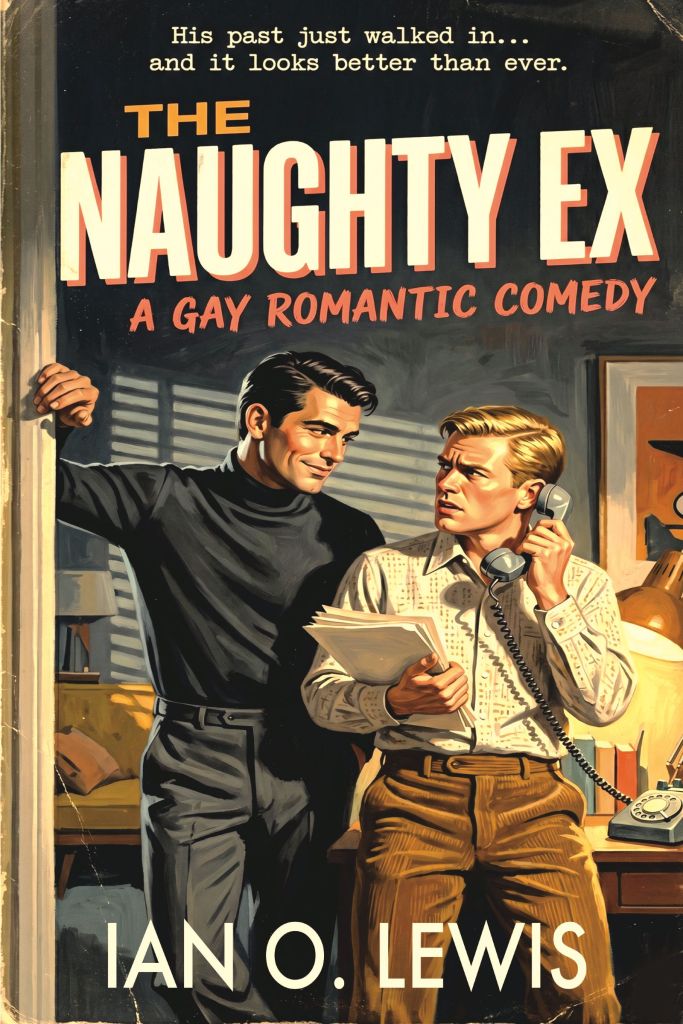
Preorder your copy of The Naughty Ex today from your favorite retailer, including Amazon, Apple Books, Kobo, Google Play, Nook, or Smashwords. The preorder price is 3.99, but the price goes up to 4.99 on release day, October 15, 2026.