Exclusive Interview: Austin Page on Love, Loyalty, and Life in Blackwood Prison

Interviewer: Austin, thank you for taking the time to talk to me today. Not everyone gets the chance to hear directly from an inmate at Blackwood Prison—especially one with your background.

Austin Page: (chuckles) My pleasure. Not much else to do in here besides read, write, and, well… think. A lot of thinking.

Interviewer: Let’s start with the obvious. You were a professor before you ended up here. That’s quite a leap. Can you tell us how you landed in prison?

Austin Page: (smiling) Now, that’s the million-dollar question, isn’t it? Let’s just say… love makes you do things you never thought you would.

Interviewer: That’s a bit vague.

Austin Page: (shrugs) Some things are better left unsaid. But I will say this—when you love someone the way I do, the rest of the world fades away. Consequences, reason, even fear. None of it matters.

Interviewer: You’re talking about Mario Cruz.

Austin Page: Of course I am. (soft laugh) Who else? Mario is—he’s the kind of man who shouldn’t need saving, but if he ever did, I’d throw myself into the fire without a second thought. He’s hard, rough around the edges, but there’s something in him… something raw and real. He doesn’t lie. He doesn’t pretend. He’s the first person I’ve ever met who sees me—not just as some soft-spoken professor, but as a man willing to fight for what I love. And I do. Every day.
Interviewer: What was it about Mario that drew you to him?

Austin Page: (smirks) Is ‘everything’ an acceptable answer? Look, I know what people think. That I’m some naive fool with a penchant for bad boys, that I threw my life away for someone who wouldn’t do the same for me. But they don’t know him. Not like I do. Mario doesn’t say much, but when he looks at me—really looks at me—I know I belong to him. And he belongs to me.

Interviewer: That sounds… intense.

Austin Page: Love is intense. If it isn’t, what’s the point?

Interviewer: So, to clarify—you didn’t end up in prison because of Mario?

Austin Page: (pauses) I ended up here because of my choices. And I’d make them again. No regrets.

Interviewer: But what were those choices, exactly?

Austin Page: (grins) You ask a lot of questions, you know that?

Interviewer: It’s kind of my job.

Austin Page: (leans forward) And mine is to keep a few secrets.

Interviewer: Fair enough. Final question—if you could go back, would you change anything?

Austin Page: (softly) No. Because in the end, every road, every decision, every damn mistake led me to him. And that? That’s worth everything.

Interviewer: Thank you, Austin.

Austin Page: Anytime. Just don’t expect all the answers.

The first episode of the Prisoners Of Sodom serial is now available for purchase exclusively at the Cruz Publishing bookstore. It will soon be available on other online bookstores.
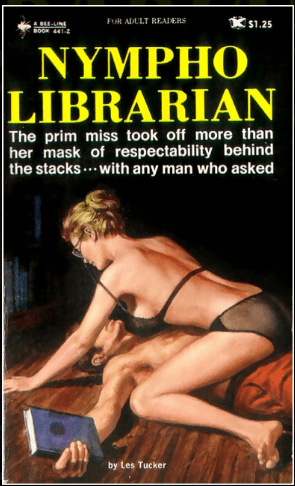
My Love Affair with Pulp Fiction – And Why I’m Writing Prisoners of Sodom

Books are in my blood—always have been. My grandmother was a librarian, my father was a printer and publisher, and my uncle was a pulp fiction fanatic who had boxes upon boxes of wonderfully trashy, over-the-top novels. Growing up, I was surrounded by the printed word, from my dad’s love of Louis L’Amour, Isaac Asimov, and classic sci-fi to the stacks of dime-store paperbacks my uncle hoarded like hidden treasure.

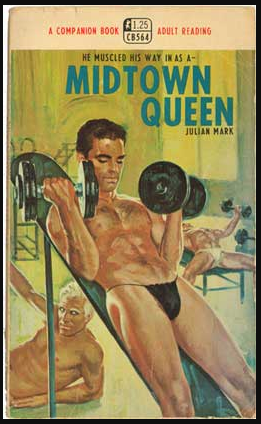
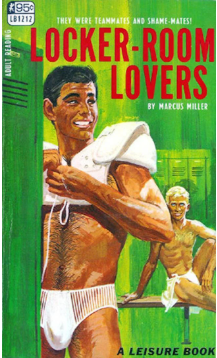
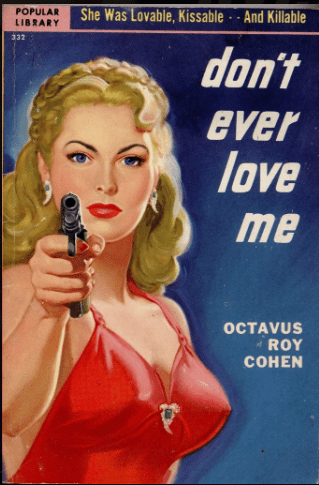
As for me? I grew up on literary greats like Gore Vidal and William Burroughs, devouring books that were praised for their sharp wit, biting social commentary, and bold storytelling. But I had a secret—I loved trashy books. The kind of lurid, scandalous, melodramatic pulp fiction that made respectable readers clutch their pearls. I couldn’t get enough of the exaggerated drama, the hard-boiled prose, and the wildly sensational covers that practically screamed “FORBIDDEN PLEASURES WITHIN.”

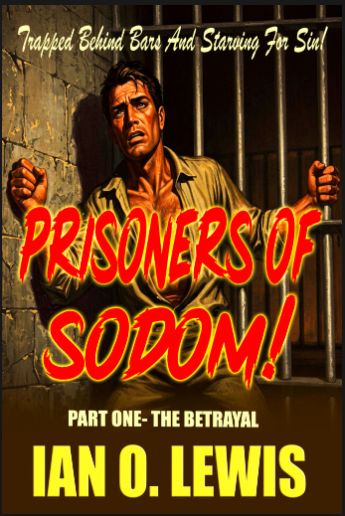
And now, for the first time, I’m writing my own gay pulp fiction series—Prisoners of Sodom. It’s gritty, sexy, unapologetically bold, and dripping with all the things I love about classic pulp: scandal, passion, betrayal, and a setting so intense it becomes a character in itself. I can’t wait for everyone to read it.

What is Pulp Fiction? And Why Mine is Unapologetically Gay and Scandalous

Pulp fiction was the beating heart of mid-20th-century popular literature—cheap, fast, and bursting at the seams with sex, violence, and high-stakes drama. Named for the low-quality wood pulp paper they were printed on, these books were mass-produced entertainment, the kind of stories you could devour in an afternoon and still feel the lingering sting of their boldness long after. They spanned genres—crime, sci-fi, westerns, horror—but the best of them had one thing in common: they didn’t hold back.

Pulp books weren’t afraid to be too much. They were gritty, exaggerated, full of morally ambiguous antiheroes and shocking twists. And the covers? Pure art. Think hand-painted illustrations of brooding detectives, femme fatales, scandalous affairs, and danger lurking in every shadow. These books were meant to grab your attention and never let go.

But classic pulp fiction had one glaring flaw—it was overwhelmingly straight. Sure, there were coded queer characters, villains dripping with barely veiled homoerotic subtext, and a handful of rare underground gems that dared to put queerness front and center. But mainstream pulp, for all its sensationalism, never truly embraced the raw, unapologetic gayness it deserved.

That’s where Prisoners of Sodom comes in. My take on pulp fiction is everything the classics were—gritty, melodramatic, scandalous—but with an unabashedly queer lens. This series is full of desperate men, dangerous temptations, and forbidden desires trapped behind prison bars. It’s pulp the way I’ve always wanted it—lurid, sweaty, and unapologetically gay.

Why Prisoners of Sodom is More Like a TV Series Than a Novel

I’m a huge fan of serialized television—the kind of shows that sink their hooks into you and won’t let go. Recently, I binged Orange Is the New Black and loved its sprawling, character-driven storytelling. I also attempted to watch OZ, but—yeah, no. That show was intense. Too intense for me. But what both of those shows got right was their ability to create a living, breathing world full of complicated, flawed characters whose lives constantly intersect in unexpected ways.

That’s exactly what I want to capture with Prisoners of Sodom. This isn’t just a single novel—it’s an experience, a long-running project I plan to write for a long time to come. There’s simply too much going on to cram it all into one book. The power struggles, the betrayals, the alliances, the raw, desperate need for love in an environment that crushes hope—it all demands room to breathe. So, rather than trying to fit it into a traditional novel structure, I’m approaching it like a TV series, with multiple “episodes” that build on each other, each packed with tension, drama, and of course, plenty of heat.

To do this story justice, I’m writing in third person, which lets me step inside the minds of more than just my two main characters. There are so many moving pieces, so many lives entwined, that limiting myself to a single perspective just wouldn’t work. But romance readers, don’t worry—at its core, Prisoners of Sodom is still a love story. Mario and Austin’s relationship remains the beating heart of the series, even as the world around them threatens to tear them apart.

So if you love steamy, character-driven drama with twists, betrayals, and passion that burns white-hot, picture Prisoners of Sodom as the kind of TV show you can’t stop watching. Only this time, it’s in book form—and unapologetically gay as hell.