

Today, we’re sitting down with Benjamin Kensington, a man whose life has been a whirlwind of ambition, love, and self-discovery. From the bustling financial world of New York City to the crumbling halls of his family estate in Montpelier, Virginia, Benjamin’s story is one of transformation, redemption, and wrestling with his own identity.
Interviewer: Benjamin, thank you for joining us today. Let’s start with your return to Montpelier. What’s it like being back at Kensington House after all these years?
Benjamin: It’s… complicated, to say the least. Kensington House is home, but it’s also a reminder of everything I wanted to escape. Coming back has stirred up emotions I thought I’d buried—nostalgia, guilt, pride… and a lot of regret. The house is in shambles, which, in some ways, feels like a metaphor for my life right now.
Interviewer: That’s an interesting comparison. The estate represents your family’s legacy, but it sounds like it also weighs heavily on you. What does Kensington House mean to you?
Benjamin: Growing up, it was a symbol of privilege, but also of obligation. My mother always emphasized the importance of preserving the estate and our family’s name. But I was young, restless, and ambitious. I didn’t want to spend my life fixing old staircases and hosting charity tours. Now, I see the house differently. It’s more than bricks and mortar—it’s history, memories, and potential. Saving it feels less like a burden and more like an opportunity to redeem myself.
Interviewer: Speaking of redemption, your return has also brought you face-to-face with Deacon. How has it been seeing him again after all this time?
Benjamin: (Pauses) Seeing Deacon has been… difficult and wonderful all at once. He’s everything I remember—steadfast, kind, and frustratingly grounded. I know I hurt him when I left, and I regret it every day. He represents a life I could’ve had if I’d made different choices. Being around him again reminds me of what I’ve lost, but also what I might still have, if I’m lucky.
Interviewer: It sounds like Deacon has had a profound impact on you. What do you think is the biggest obstacle between the two of you now?
Benjamin: Trust. I broke it when I chose my career over him, and I can’t blame him for being wary now. I’ve spent so much of my life chasing status and wealth, and I think Deacon sees me as someone who only cares about the surface of things. Proving to him—and to myself—that I’m capable of more is the hardest challenge I’ve ever faced.
Interviewer: Shifting gears a bit, let’s talk about your career. You’ve mentioned how important ambition was to you in the past. Do you still see yourself returning to the world of finance?
Benjamin: Ambition has always been a driving force for me, but I’ve started questioning what that word really means. Does it mean climbing the corporate ladder, or does it mean building something meaningful that lasts? For now, I’m focused on restoring Kensington House. Whether that means turning it into a wedding venue, a museum, or something else entirely, I’m determined to make it a success.
Interviewer: That’s a big shift from the fast-paced world of New York City. How has your time back in Montpelier changed your perspective?
Benjamin: It’s been humbling, honestly. In New York, everything was about appearances—how much you made, what you wore, who you knew. Here, none of that matters. What matters is community, relationships, and legacy. I’ve had to confront parts of myself I didn’t like very much. It’s been uncomfortable, but also necessary.
Interviewer: You’ve mentioned legacy a few times now. What does it mean to you, and how does it play into your current journey?
Benjamin: Legacy used to mean power and prestige—carrying on the Kensington name in a way that turned heads. Now, it’s more about connection. It’s about honoring the people who came before me, like my mother, and creating something worthwhile for the future. Restoring Kensington House isn’t just about the building; it’s about proving to myself and others that I can leave something good behind.
Interviewer: It sounds like you’re on a path of transformation. If you could go back in time and tell your younger self one thing, what would it be?
Benjamin: I’d tell him to slow down. To stop chasing things that only look good on paper and pay more attention to the people who truly matter. Ambition isn’t inherently bad, but when it blinds you to love and authenticity, it can destroy you.
Interviewer: That’s beautifully said. Last question—what do you hope for your future?
Benjamin: I hope to find balance. I want to build a life that honors both my ambition and my heart. Whether that means rebuilding Kensington House, rekindling my relationship with Deacon, or simply finding peace with myself, I just want to be proud of the man I’ve become.
Interviewer: Thank you, Benjamin. Your honesty and vulnerability are inspiring. We wish you the best as you navigate this new chapter of your life.
Benjamin: Thank you. It’s not easy, but I’m learning that the hardest paths are often the most rewarding.
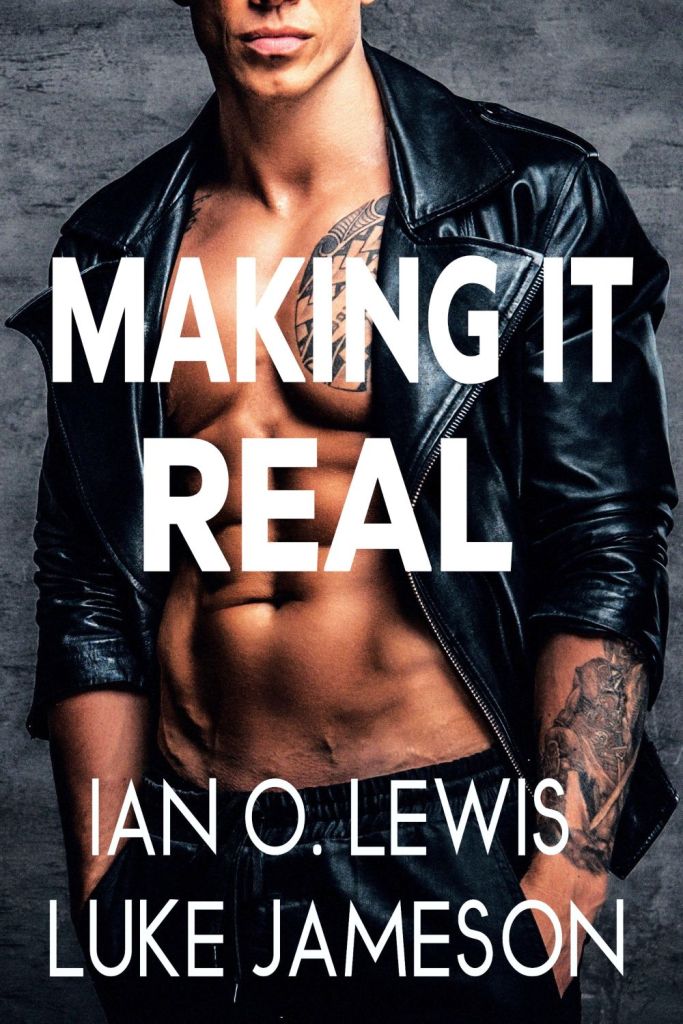
Making It Real publishes on February 26, 2025. It’s available on Amazon, Apple Books, Google Play, Kobo, Nook, and Smashwords. Preorder your copy today for the low price of 2.99. On the day it publishes the price goes up to 3.99, so reserve your copy today and save!

 Ian O. Lewis and Luke Jameson