
The Night We Found Sanctuary

Chapter 8- Petyr

I held out my hand in the dark. The flickering credits lit Dimitri’s face in pulses—white, then shadow, then white again. He stared at my open palm like it might bite him.

I said nothing. I didn’t need to. He understood what I was offering. Not just help from the creaky velvet seat, but something else. A question I couldn’t speak aloud.

After a long second—two, maybe three—Dimitri slid his hand into mine. His skin was warm. Warmer than I expected, and dry like paper in winter. I tightened my grip and lifted him to his feet.

And then I let go.

We shuffled down the narrow aisle with the other filmgoers, coats rustling like dry leaves, boots scraping the cracked tile floor. I kept my hands jammed in my coat pockets, fingers still tingling from that brief, stupid, beautiful contact.

Outside, the cold wrapped around us like a punishment. The night air smelled like burnt coal and wet stone. My breath came out in ghosts. I couldn’t look at Dimitri. Not directly. Not yet.

The streets were mostly empty—too late for commuters, too early for the drunks. A trolley clattered past on the far side of the square, its windows steamed up, casting yellow light like a terrible memory.

I should’ve left it there. Should’ve said goodnight, gone home to a mug of watery tea, and tried to pretend that a man like Dimitri never would have taken my hand in the dark. But I couldn’t stop thinking about what I saw in the restroom earlier.

He was leaning against the cracked porcelain sink, with a cigarette dangling from his lips. Sergei. One of the old guard from Sanctuary. He nodded when he saw me and said nothing—but I knew what that meant.

“Is it still there?” I asked him casually, like I was asking about the price of eggs.

He didn’t answer right away. Just looked at me, eyes sharp. Then: “No. Moved last week. Same password. Bathhouse on Kirochnaya, three blocks from here.”

I barely had time to thank him before he stubbed out the cigarette on the sink and vanished like smoke.

And now here I was, walking with Dimitri, who might ruin everything.

If I was wrong—if I’d imagined the way he looked at me, the way he sat just a little too close in the cinema—then this was suicide.

If I was wrong, he could report me. One anonymous phone call to the wrong party official and I’d disappear like that cigarette smoke. Not just me, either. Every man at Sanctuary, every man who ever trusted me.

I had Vera, thank God. She could say all the right things. She could cry on cue. Our neighbors loved her. She’d never crack.

But if Dimitri ever found out that she and I were fake—just a pair of ghosts in a frame—then I’d be out of alibis. And Vera… she didn’t deserve to go down with me.

I couldn’t tell him. I wouldn’t tell him. If this night led to anything—if it became a story instead of a mistake—I’d tell him Vera didn’t know a thing. I’d lie through my teeth to keep her safe.

We walked in silence. Our boots crunched on the old frost. The bathhouse loomed just a couple of blocks ahead, abandoned by the city but reborn by us. Its windows were dark. Always dark.

Halfway there, Dimitri stopped walking.

“What is Sanctuary?” he asked.

My heart made a noise I didn’t care for. Not a beat, no, something worse. Like a hinge breaking.

I turned toward him. Dimitri looked serious. Not angry. Not frightened. Just… wary. Like someone listening to a song he didn’t know the words to.

And that was the moment. The moment to turn around, to say “Forget it, let’s get a drink,” to laugh it off like it was a joke.

But I looked at him, like I really looked at him. And something in his face, his eyes, maybe, or the way he tilted his chin like he expected pain, made me want to put my hands on his shoulders and promise him everything would be okay. Even if it wouldn’t.

“It’s a club,” I breathed. “A secret one. Very exclusive.”

He frowned. “For what?”

I exhaled, fog billowing between us.

“For men,” I said. “Like ourselves.”

He blinked. “Like—what do you mean?”

I didn’t answer. Just started walking again, slowly. He followed.

I didn’t know if that meant Dimitri understood, or if he just didn’t want to be left alone on the street. Maybe both.

Each step closer to the bathhouse felt like a countdown. To what, I wasn’t sure. Salvation, or exposure. Either way, I’d know by the end of the night.

The old bathhouse loomed like a relic of some forgotten empire, all crumbling stone and ironwork detail blackened by years of soot and cold. The windows had been boarded up long ago, and the glass that remained was warped and yellowed like old teeth.

As we approached, I spotted a man lingering just to the side of the main entrance. Heavy coat, fur hat pulled low, cigarette glowing between his fingers. I knew his face. Mikhail, or maybe it was Milosz—names were slippery here, rarely used.

I nodded once. “Where’s the entrance tonight?”

He didn’t speak, just jutted his chin toward the alley that snaked down the left side of the building.

“Thanks,” I muttered, and led Dimitri down the narrow passageway.

The alley was quiet, shielded from the wind, but no warmer for it. A rusted drainpipe dripped somewhere behind us. Halfway down, we found the door—plain wood, painted gray, with a handle that looked like it had been yanked off an industrial freezer.

I knocked. Once, then twice, then once again. The rhythm, like always.

It opened a crack. A man with sharp cheekbones and a shaven head peered out, face cast in shadow.

“Who sent the invitation?” he asked.

I didn’t hesitate. “The conductor’s baton,” I said.

He nodded, unimpressed. “Two rubles each.”

Of course. I pulled my hand from my pocket and handed him a folded bill. He took it, inspected it like it might be counterfeit, then swung the door open wider and stepped aside.

“Welcome to Sanctuary,” he muttered.

We stepped inside.

The first thing that hit me was the heat. Not just warmth—heat. The kind that made you want to rip off your coat and shirt and skin. It smelled like old steam, sweat, cigarettes, and the ghost of something floral—someone had brought cologne, bless them.

The lights were dim, with low-watt amber bulbs that made everyone look better than they were. The ceilings were high, still arched, like in the days when men came here to sweat out their sins. Cracked tiles lined the floor, and the walls were flaking paint in pastel shades of green and blue.

There were maybe twenty, thirty men. Some milling about in twos and threes, talking in low voices. Others leaned against the walls like they were part of the furniture. At the far end of the room was a bar—more of a table with bottles on it, but it did the job. A mirror hung crookedly behind it, and a fan turned lazily above, doing absolutely nothing.

“I’ll get the first round,” Dimitri said suddenly.

I blinked at him. “What?”

“You paid to get us in.” His jaw was set like he was volunteering for the front line. “Let me get the drinks.”

I didn’t argue.

We approached the bar, and the bartender, a man who looked like he’d lived through several regimes and hated all of them, eyed us with suspicion before grunting. Dimitri ordered vodka. Two shots. The genuine kind, not the potato-flavored turpentine they served in worker bars.

The bartender slammed the glasses down and swept the money away before we could blink.

We took our drinks and started walking. I didn’t lead. I let Dimitri take it in, his eyes darting to the shadows, the alcoves, the archways that once led to changing rooms and now led to secrets.

That was when he stopped.

He froze mid-step. Glass still in hand.

I turned to follow his gaze.

In the far corner, half-hidden behind a concrete column and a threadbare curtain, two men stood very close. One pressed the other against the wall, his hand buried in the other’s hair. Their mouths moved together, slow and hungry, like they had all the time in the world.

Dimitri stared. He didn’t blink. His jaw slackened just slightly.

I said nothing.

The noise of the room fell away. It always did in moments like this, when the rest of the world didn’t matter. Only the breath between us. The beat of a heart. The truth rising up from somewhere too deep to deny.

I took a breath. Held it.

Then, with all the calm I didn’t feel, I reached for his hand.

He didn’t look at me. Not yet. He stared at my hand like it was something that might explode.

Then Dimitri looked up.

His eyes—God, those eyes—widened, not in fear, but in recognition. Something clicked. Some ancient lock deep in his chest finally gave way.

And then, slowly, he slid his hand into mine.

It was warm. Steady.

I wanted to shout out loud and drag him out onto the cracked tile floor and dance until our boots fell apart. I wanted to kiss him right there, just to prove I hadn’t imagined the whole thing. But I didn’t do any of those things.

Instead, I just squeezed his hand.

And for the first time in a long time, I felt like I hadn’t been wrong.

I didn’t say a word as I led him away from the soft murmur of voices and the flickering amber bulbs. Just tightened my grip on his hand and walked, careful not to rush, careful not to let go.

There was a quiet alcove off to the side, half-shielded by an old shower curtain still hanging from a bent rod. The tiles back here were chipped worse than the rest, the air damp with ghostly memories of water and steam. It was far enough from the others to feel hidden, but not so far as to feel dangerous.

We stopped.

I turned to face him, and he looked at me like I had just pulled him underwater. His eyes searched mine, restless, unsure whether to fight or surrender.

We still held our drinks.

“To surviving another week of blankets,” I said, trying for humor, but my voice cracked halfway through.

He blinked. Then nodded, and we both tipped back our vodka. It hit like fire and smoke.

Dimitri lowered his glass and stared at it for a long moment.

Then, in the quietest voice I’d ever heard from him, he asked, “Why did you bring me here?”

His voice trembled. Not with fear, at least not only that, but with something heavier. Hope, maybe. Or a longing that hadn’t yet found a place to land.

I took the glass from Dimitri’s hand and set it down beside mine on the low ledge. Then I stepped forward, into the small pocket of space between us.

He didn’t move.

I reached up, rested my fingers on his jaw, and saw his throat jump as he swallowed.

“Because I couldn’t keep pretending,” I said, my voice low. “I couldn’t stop thinking about what you might taste like.”

And then I kissed him.

There was no music. No crescendo of violins or clamor of trumpets—just the wet click of our lips and the pounding of my heart, too loud in my own ears.

He gasped into my mouth, like he’d forgotten how to breathe until now.

It wasn’t a perfect kiss. Our noses bumped, and my hand shook a little, and I felt him trembling beneath his coat like a storm just starting. But when he kissed me back, God, when he kissed me back, it was like the world cracked open.

I broke away first, only because I had to. Because if I didn’t, I was going to fall apart right there.

We were both breathing hard. Not like men who had climbed stairs, but like men who’d been holding their breath their whole lives and had finally exhaled.

“This,” I said softly, brushing my thumb against his cheek. “This is why I brought you here.”

Dimitri blinked, dazed. “Because of the kiss?”

I nodded. “Because of everything leading up to it.”

And Dimitri kissed me again.

This time, there was nothing gentle about it. It was hunger and terror, and his hands clutched at my coat like he was afraid I might disappear. I pressed him back against the cold tile wall and gave him everything I had.

We broke apart, panting, eyes locked. Every part of me felt like it was sparking.

There was a pause. Long. Heavy. Beautiful.

Then Dimitri whispered, “What happens next?”

Preorder your copy of The Fire Beneath The Frost from your favorite online bookstore now.
Colliding with the Past: When Benjamin Meets Deacon Again

After more than a decade apart, Benjamin Kensington returns to his family estate—only to come face-to-face with the one man he never truly let go of. In this long-overdue reunion, old tensions and undeniable chemistry simmer beneath the surface as Benjamin and Deacon Langford meet again in the dusty confines of the Kensington barn. But with history between them as weathered as the estate itself, will they find common ground… or just reopen old wounds?

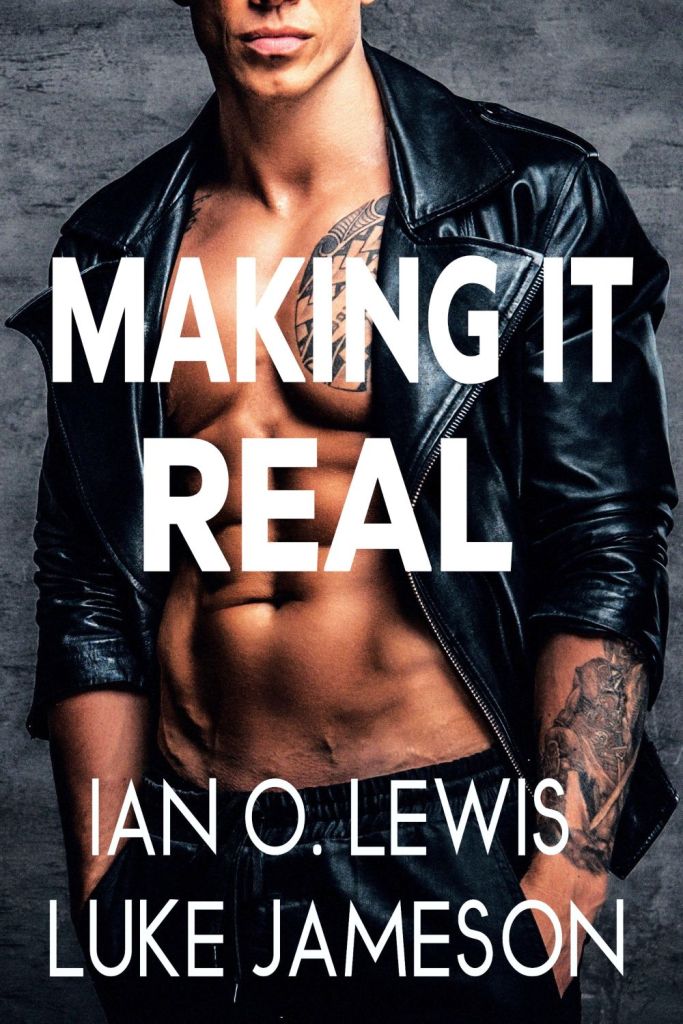
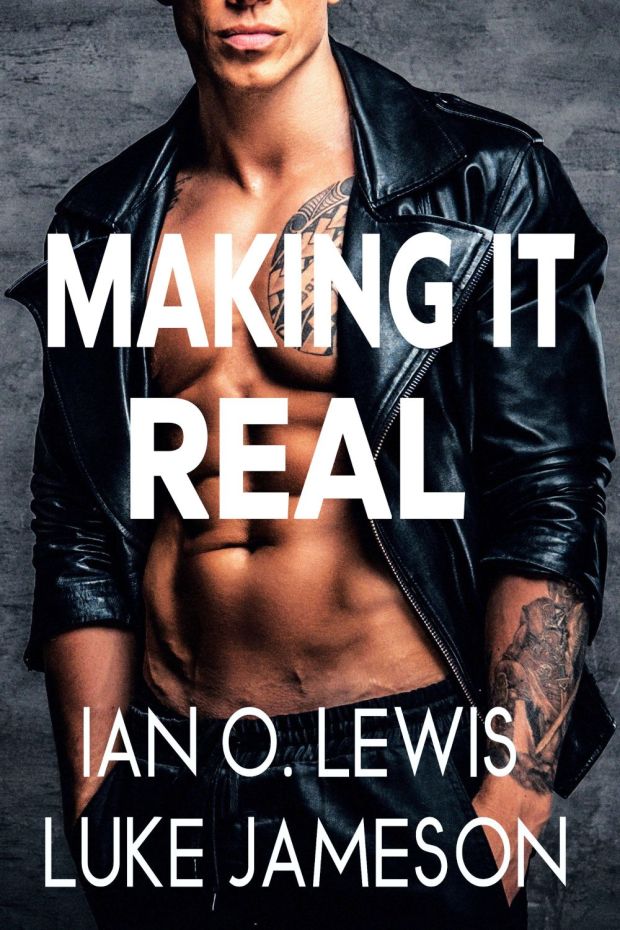
Read on for Chapter 3 of Making It Real, where the past and present collide in the most unexpected way.

The late afternoon sun stretched long golden fingers across the fields, the tall grass swaying like waves on a restless sea. The scent of honeysuckle and warm earth filled the air, wrapping around me in a way that felt almost too familiar. Too intimate.

I walked beside my mother, our steps crunching softly over the dirt path that led toward the barn. She talked a mile a minute, her voice light and lilting, as if I’d only been gone a few months instead of more than a decade.

“I just can’t tell you how pleased I am to have you back, Benji,” she said, looping her arm through mine. “Even if it’s just for a little while.”

I gave her a sideways glance. “You make it sound like I was lost at sea.”

“Well, weren’t you? New York, all that hustle and bustle—Lord knows I don’t understand how anyone could live in a city like that.” She patted my arm. “I always knew you’d come home, though. Kensington men always do.”

I swallowed. She hadn’t asked me about my being fired, and I wasn’t ready to talk about it. Not yet.

Instead, I let her chatter on about the latest local news—the Hansons’ dog finally had her puppies, some new bakery had opened up on Route 33, and Lord help us all, Lucille Montgomery had been in three car accidents over the past year. Mom wondered when they’d take her license away.

I nodded along, but my attention was elsewhere.

For the first time, I really looked at my mother.

She was still the formidable Maggie Kensington, with her perfectly styled hair and that air of effortless Southern charm, but there were new lines around her eyes, a certain tiredness in the way she moved. When had she started looking… older?

Something uneasy settled in my chest. Maybe it really was time to come home.

Not permanently, of course. Just long enough to make sure she was okay.

We rounded the bend, and the barn came into view.

I nearly stopped in my tracks.

The old place looked like hell.

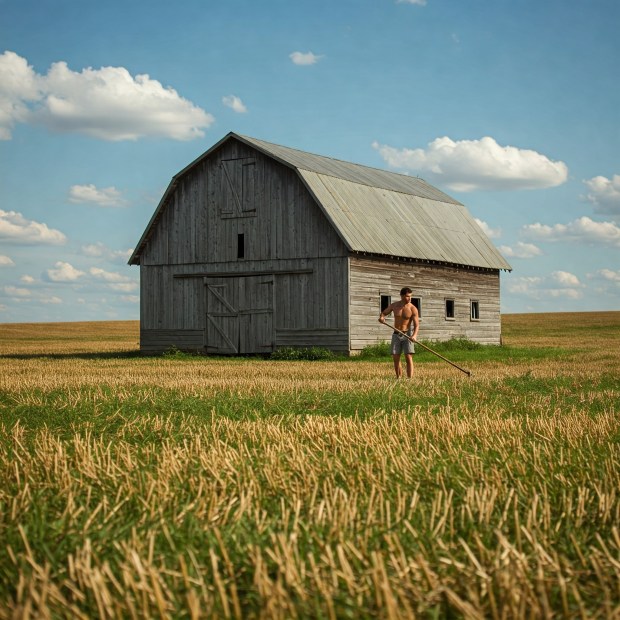
The once-bright red paint had long since faded to a tired, splintered gray. The roof sagged in places, and I didn’t even want to think about the condition of the inside.

Mom let out a sigh, shaking her head. “Lord, it needs work.”

That was putting it mildly.

She gave me a sideways glance. “You remember how beautiful it used to be?”

I did. I remembered everything.

Sneaking in here as kids, building forts in the loft, whispering secrets in the dark. And later—much later—stealing away to this very barn in the heat of summer, pressing Deacon against the rough wooden beams, feeling the solid strength of him beneath my hands, tasting sweat and salt and something sweeter than anything New York had ever offered me.

I swallowed hard.

Deacon.

Jesus. What if I saw him while I was here?

Would he still hate me? Probably.

I deserved it.

I’d spent years trying not to think about how I’d treated him. The cruel words I’d said. About the way I’d tried to shape him into someone he wasn’t, someone who would fit neatly into the polished future I’d imagined for myself.

But he’d been right.

He wasn’t meant for skyscrapers and boardrooms. His destiny was this land, the fields, and the sun on his skin.

And God help me, I’d never felt as safe, as seen, as whole as I had when I was with him.

Mom gave my arm a little squeeze. “Come on, let’s look inside.”

I took a breath and followed her into the dim interior, expecting dust and disrepair.

What I wasn’t expecting was him.

Deacon stood in the middle of the barn, shirt in hand, his tanned skin gleaming with a light sheen of sweat. He looked like something out of a damned painting, the afternoon sun cutting through the slats in golden beams, lighting him up like a statue of a god—earthy and strong, carved from muscle and memory.

My breath caught in my throat.

Deacon’s eyes locked onto mine, and for a moment, time folded in on itself.

I wasn’t Benjamin Kensington, the man who’d clawed his way up the corporate ladder. I wasn’t the guy who had just lost everything.

I was eighteen again.

I was standing in this barn, my hands buried in Deacon’s hair, my lips pressed to his, the world outside falling away.

Heat crawled up my neck, and I realized, with no small amount of horror, that I was blushing.

Mom clapped her hands together, oblivious to the tension that had sucked all the air out of the barn.

“Well, now! Isn’t this just perfect?” she said, beaming between us. “The two of you, back together, just like old times.”

Not exactly, Mother.

She turned to me with a wide smile. “You know, Deacon’s been helping me out around here for years. I was just saying how much this place needs work—wouldn’t it be wonderful if you two worked on it together? Just imagine it, Benji! The two of you, bringing the estate back to its former glory.”

Her voice was light, hopeful.

Deacon’s face was unreadable.

And me?

I was wondering how the hell I was supposed to survive this.

Mom kept talking, her voice bright with excitement, but I wasn’t listening.

I couldn’t.

Deacon’s gaze locked onto mine, and for the life of me, I couldn’t look away.

Those eyes—icy blue, sharp as ever, even in the hazy light filtering through the barn. When we were younger, I used to swear they could see right through me, past all the charm and bravado, straight to the things I didn’t dare admit.

Now?

Now they held me in place like a snare.

The golden shafts of afternoon light caught the flush creeping up his chest, dusting across his neck before settling high on his cheeks. He turned away first, and I exhaled, realizing I’d been holding my breath.

Was that embarrassment? Or something else?

Did he still hate me?

Or had seeing me again hit him just as hard as it had hit me?

“Benji, did you hear me?” Mom’s voice pulled me back, her perfectly manicured hands gesturing around the barn. “I said we need to find a way to make this place profitable again.”

“Hmm?” I asked, still too caught up in Deacon’s presence to register the question.

Deacon shifted, rolling his shoulders, then cleared his throat.

“It’s good to see you, Benjamin.” His voice was low, rough around the edges, like he hadn’t spoken much today. Maybe he hadn’t.

That flush from before deepened across his throat, and something tightened low in my stomach.

I opened my mouth, but before I could respond, Mom jumped in again.

“Benji, I asked how we can make Kensington House profitable. Property taxes are going up, but there’s next to no revenue coming in.”

I blinked at her, barely processing the question. My mind was still stuck on Deacon, on the way his voice had brushed against my skin like a whisper of a touch.

Mom huffed, impatience creeping into her tone.

“Well?”

I rubbed my temples, sighing. “Maybe we’d be better off selling it to someone who actually cares about it.”

The words had barely left my mouth before I realized my mistake.

Mom’s eyebrows shot skyward. Deacon frowned, jaw tightening as his eyes darkened.

The air in the barn shifted.

Mom placed a hand on her hip. “Benjamin Kensington, I cannot believe you just said that.”

“Mom—”

“This land has been in our family for generations.” She waved an arm toward the open barn doors. “Do you have any idea how much history is here? Your grandfather, your great-grandfather, every ancestor before them—they worked this land, they built this home, and you think selling it is the answer?”

I sighed again, this time heavier. “I’m just saying—”

“No.”

The word came from Deacon.

I turned toward him, surprised by the sharp edge in his tone.

“You never change,” he muttered, shaking his head. “You never gave a damn about this place. Benjamin, you’re lucky to have it, and you can’t even see that.”

A prickle of irritation worked its way up my spine.

“That’s not fair,” I said, leveling him with a look. “It’s easy for you to say that. You stayed.”

“Yeah,” Deacon said, eyes flashing. “I did.”

The weight of what he wasn’t saying settled between us.

I left home and never looked back.

Until now.

I sighed, trying to smooth things over. “Look, I didn’t mean—”

“Enough of that,” Mom interrupted, waving a hand as if physically dismissing the tension. “I asked you here to talk about solutions, not start up old arguments.”

Deacon exhaled through his nose, but kept quiet.

Mom turned to him, a hopeful smile on her face. “Deacon, I’d like to hire you to work on the estate. We can start with the barn—it needs more work than anything.”

Deacon’s posture relaxed slightly, his gaze shifting toward the exposed beams above us.

She continued, “And another thing—what about all that old farm equipment we don’t use? I was thinking we could sell some of it.”

Deacon finally turned, his eyes scanning the far corner of the barn. My gaze followed his, landing on a hulking piece of rust-covered machinery. I didn’t know what it was, but I could tell by the look on his face that he did.

Slowly, he faced Mom again, and for the first time since we’d walked in, he smiled.

A genuine smile.

Soft. Familiar. The kind that made my stomach tighten for reasons I didn’t want to think about.

Instead of answering immediately, he walked over to the piece of equipment, running a hand along the corroded metal. Then he turned back to Mom.

“How about this?” he said. “Instead of paying me money, I’ll work in exchange for some of this old equipment.”

Mom’s face lit up. “That’s a fine idea! Lord knows we don’t need half the things stored in this barn.”

“Deal,” Deacon said, giving her a small nod.

Mother clasped her hands together, positively beaming. “Oh, Deacon, this is just wonderful! With your help, we’ll have this place looking like it should again.”

Deacon gave her a small nod, but his expression was careful, guarded. His fingers trailed along the rusted edge of the old farm equipment, his focus seemingly on anything but me.

Then Mother turned in my direction, her keen eyes narrowing.

“And you,” she said, pointing a manicured finger in my direction. “You’re going to help.”

I blinked. “What?”

“You heard me, Benji. Deacon can’t do all this by himself.”

Deacon shifted beside me. I caught the way his throat worked as he swallowed, a fresh blush creeping up his neck. He hesitated before muttering, “Let Benjamin handle the business side of things. I can take care of—”

“Oh, nonsense,” Mother interrupted, waving off his protest. “Benji needs to get his hands dirty again. He needs to understand how lucky he is to have this place.”

I exhaled through my nose, resisting the urge to roll my eyes. “Mom—”

She wasn’t finished. “And besides, I remember how happy you boys used to be, working out here together.”

My stomach twisted at that.

She stepped away from us, walking toward the hulking old tractor in the corner. It was ancient, covered in dust and rust, but I could still picture it as it once was—faded red, chugging along the fields under the hot Virginia sun.

Mother ran her fingers over the worn metal, then turned back with a smile. “I’ll never forget the sight of you two on this thing. Deacon, bush hogging the pastures, Benji perched behind you, hanging on for dear life.” She laughed, a soft, nostalgic sound. “You two had the best time, always laughing.”

Deacon’s shoulders tensed, and for the briefest moment, something flickered in his expression—something tight and unreadable.

I swallowed, suddenly too aware of how still the barn had become. The only sounds were the faint creak of the rafters and the distant chirping of cicadas.

Then, just as quickly as it came, whatever crossed Deacon’s mind disappeared behind a careful mask. His lips twitched into a small, tight smile.

“I’ll do whatever you want, Miss Maggie.”

A strange feeling settled in my chest—something close to relief.

Deacon grabbed his shirt from where it had been hanging, shaking out the fabric before pulling it over his head. The sweat on his skin made it cling to his torso for a moment, outlining the shape of him before he tugged it into place.

I should’ve looked away.

But I didn’t.

“Benji?” Mother’s voice jolted me from my thoughts. “Are you going to pitch in too?”


Making It Real publishes on February 26, 2025. It is available for a discounted preorder price of 2.99 for the ebook, and on release day the price goes up to 3.99, so lock in the lower price now by preordering the book from your favorite online retailer. It’s available on Amazon, Apple Books, Google Play, Kobo, Nook, and Smashwords.

Interview with Benjamin Kensington: Ambition, Redemption, and the Weight of Legacy

Today, we’re sitting down with Benjamin Kensington, a man whose life has been a whirlwind of ambition, love, and self-discovery. From the bustling financial world of New York City to the crumbling halls of his family estate in Montpelier, Virginia, Benjamin’s story is one of transformation, redemption, and wrestling with his own identity.


Interviewer: Benjamin, thank you for joining us today. Let’s start with your return to Montpelier. What’s it like being back at Kensington House after all these years?

Benjamin: It’s… complicated, to say the least. Kensington House is home, but it’s also a reminder of everything I wanted to escape. Coming back has stirred up emotions I thought I’d buried—nostalgia, guilt, pride… and a lot of regret. The house is in shambles, which, in some ways, feels like a metaphor for my life right now.


Interviewer: That’s an interesting comparison. The estate represents your family’s legacy, but it sounds like it also weighs heavily on you. What does Kensington House mean to you?

Benjamin: Growing up, it was a symbol of privilege, but also of obligation. My mother always emphasized the importance of preserving the estate and our family’s name. But I was young, restless, and ambitious. I didn’t want to spend my life fixing old staircases and hosting charity tours. Now, I see the house differently. It’s more than bricks and mortar—it’s history, memories, and potential. Saving it feels less like a burden and more like an opportunity to redeem myself.

Interviewer: Speaking of redemption, your return has also brought you face-to-face with Deacon. How has it been seeing him again after all this time?

Benjamin: (Pauses) Seeing Deacon has been… difficult and wonderful all at once. He’s everything I remember—steadfast, kind, and frustratingly grounded. I know I hurt him when I left, and I regret it every day. He represents a life I could’ve had if I’d made different choices. Being around him again reminds me of what I’ve lost, but also what I might still have, if I’m lucky.


Interviewer: It sounds like Deacon has had a profound impact on you. What do you think is the biggest obstacle between the two of you now?

Benjamin: Trust. I broke it when I chose my career over him, and I can’t blame him for being wary now. I’ve spent so much of my life chasing status and wealth, and I think Deacon sees me as someone who only cares about the surface of things. Proving to him—and to myself—that I’m capable of more is the hardest challenge I’ve ever faced.


Interviewer: Shifting gears a bit, let’s talk about your career. You’ve mentioned how important ambition was to you in the past. Do you still see yourself returning to the world of finance?

Benjamin: Ambition has always been a driving force for me, but I’ve started questioning what that word really means. Does it mean climbing the corporate ladder, or does it mean building something meaningful that lasts? For now, I’m focused on restoring Kensington House. Whether that means turning it into a wedding venue, a museum, or something else entirely, I’m determined to make it a success.


Interviewer: That’s a big shift from the fast-paced world of New York City. How has your time back in Montpelier changed your perspective?

Benjamin: It’s been humbling, honestly. In New York, everything was about appearances—how much you made, what you wore, who you knew. Here, none of that matters. What matters is community, relationships, and legacy. I’ve had to confront parts of myself I didn’t like very much. It’s been uncomfortable, but also necessary.


Interviewer: You’ve mentioned legacy a few times now. What does it mean to you, and how does it play into your current journey?

Benjamin: Legacy used to mean power and prestige—carrying on the Kensington name in a way that turned heads. Now, it’s more about connection. It’s about honoring the people who came before me, like my mother, and creating something worthwhile for the future. Restoring Kensington House isn’t just about the building; it’s about proving to myself and others that I can leave something good behind.


Interviewer: It sounds like you’re on a path of transformation. If you could go back in time and tell your younger self one thing, what would it be?

Benjamin: I’d tell him to slow down. To stop chasing things that only look good on paper and pay more attention to the people who truly matter. Ambition isn’t inherently bad, but when it blinds you to love and authenticity, it can destroy you.


Interviewer: That’s beautifully said. Last question—what do you hope for your future?

Benjamin: I hope to find balance. I want to build a life that honors both my ambition and my heart. Whether that means rebuilding Kensington House, rekindling my relationship with Deacon, or simply finding peace with myself, I just want to be proud of the man I’ve become.


Interviewer: Thank you, Benjamin. Your honesty and vulnerability are inspiring. We wish you the best as you navigate this new chapter of your life.

Benjamin: Thank you. It’s not easy, but I’m learning that the hardest paths are often the most rewarding.


Making It Real publishes on February 26, 2025. It’s available on Amazon, Apple Books, Google Play, Kobo, Nook, and Smashwords. Preorder your copy today for the low price of 2.99. On the day it publishes the price goes up to 3.99, so reserve your copy today and save!

An Exclusive Interview with Jack Barrett, Star of The Money Shot!

Hello, readers! Today, I’m delighted to sit down with Jack Barrett, one of the stars of my upcoming novel Money Shot. Jack is the steady force in a whirlwind of chaos, but even he couldn’t have anticipated just how much his life would change after moving into a gorgeous (and overpriced) New York apartment with his two best friends, Liam and Bradley. Let’s get to know him better and uncover a little more about the romance—and the madness—that’s at the heart of Money Shot.

Interviewer: Jack, welcome! Your life’s been anything but boring lately. How would you describe what’s been going on since you and your roommates moved into your new apartment?

Jack: Oh man, where to even start? Moving in felt like the beginning of a dream—three friends, this amazing space, everything on track. But, uh, let’s just say it didn’t stay that way. Bradley…well, he turned out to be a bit of a surprise, and not the good kind. And Liam? I’ve known him for years, but suddenly, he’s a whole different kind of surprise.

Interviewer: Sounds like there’s a story there! Liam’s a big part of your life—what’s it been like navigating your relationship with him during all this?

Jack: Complicated. Liam’s always been this quiet, thoughtful guy, but there’s so much more going on under the surface. Lately, I’ve seen a side of him I didn’t know existed. He’s determined, ambitious, and…vulnerable, in a way that makes you want to protect him, even when he’s driving you up the wall.

Interviewer: Vulnerable? That’s an interesting word choice. How would you describe your connection with him?

Jack: It’s like this slow burn, you know? We’ve always been close, but something’s shifting. There’s this… electricity between us that I can’t ignore. At first, I thought I was imagining it, but now? Let’s just say I think we’re both figuring out what we really mean to each other.

Interviewer: That sounds romantic! Have you had a moment where you realized things were changing between you two?

Jack: Definitely. There’s been a lot of trial and error with everything going on—messy situations that force you to look at the people in your life differently. Liam and I have had our share of awkward moments, but through all of it, we’ve started seeing each other in ways we hadn’t before. He’s more than just my best friend.

Interviewer: I love that. But let’s talk about the other roommate for a second—Bradley. From what I’ve heard, he’s been…a challenge?

Jack: (laughs) That’s putting it lightly. Bradley’s the kind of person who makes an impression, for better or worse. Living with him has been like having a front-row seat to the world’s most unpredictable reality show. But hey, life’s never dull with Bradley around.

Interviewer: No kidding! So, between Bradley’s antics and everything happening with Liam, it sounds like you’ve had your hands full. Any regrets about how things have turned out so far?

Jack: Not a single one. Sure, it’s been chaotic, and I’ve had to make decisions I never thought I’d have to make. But all of it—the highs, the lows, the moments in between—has brought me closer to Liam. And that makes it worth it.

Interviewer: That’s so sweet. One last question before we let you go: If you could describe Money Shot in just three words, what would they be?

Jack: Heartfelt, steamy, and surprising.

Interviewer: Love it! Thanks so much for chatting with us, Jack. I know readers are going to fall for you and Liam when Money Shot releases.

Jack: Thanks for having me. And to everyone reading—get ready, because this story’s got more twists and turns than I ever expected.


Money Shot is coming soon, and trust me, you’ll want to be there when Jack and Liam’s slow burn ignites. Stay tuned for more updates and sneak peeks as we get closer to release day!


An Interview with Maxwell “Max” Coleman: RVA’s Food Critic on Flavor, Recovery, and Rebirth

As the heart of Richmond’s culinary scene continues to beat stronger than ever, it’s hard to ignore one of the city’s rising stars in food journalism, Maxwell “Max” Coleman. A food blogger with a loyal following and a discerning palate, Max has made waves not just for his honest takes on local cuisine but for his own deeply personal journey of healing and transformation. Today, I sat down with Max to talk about food, life, and what’s next for this talented writer as he makes RVA his new home.

Q: Max, first of all, welcome to RVA! You’ve made quite a name for yourself in the food world, but before we get into all of that, let’s talk about your decision to move to Richmond. Why now, and why here?

Max Coleman: Thanks! Richmond has always had a special place in my heart. It’s not just the food scene, although that’s a big part of it. After everything I went through—recovering from my injuries, dealing with addiction, and getting back on my feet—I wanted a fresh start. RVA is close to where I grew up in Norfolk, but it also gives me the chance to carve out something new, you know? Plus, there’s just so much happening here in terms of food and culture, I couldn’t resist.

Q: You mentioned your recovery, and I know that’s a big part of your story. Can you share a little more about that journey?

Max Coleman: Yeah, it’s definitely been a wild ride. After the Unite The Right protest in Charlottesville where I got injured, things took a dark turn for me. The physical pain was one thing, but the emotional toll—that’s what really hit me. I got caught up in prescription pills, which started out as a way to manage the pain but became something much more destructive. There were moments I didn’t know if I’d make it out, to be honest.

But food became my lifeline. Writing about food, photographing it, experiencing it—it gave me something positive to focus on. It’s strange to say, but in a way, food saved me. That’s why I’m so passionate about it. It’s more than just a meal for me; it’s part of my healing.

Q: That’s powerful, Max. How has your personal journey shaped the way you approach food blogging?

Max Coleman: It’s all about being present for me. I used to be the guy who’d chase the next big trend, but now, I’m more interested in stories—both on the plate and behind it. Food is an expression of culture, of history, of love, and sometimes, even of pain. I like to dig deep into that, into why a chef chooses certain ingredients or why a dish matters to a community. And that’s why I focus so much on local chefs and hidden gems—there’s a richness to be found in the stories behind the food.

Q: Speaking of your blog, it’s been growing steadily! What’s next for you in terms of content creation and the overall direction of your platform?

Max Coleman: Oh man, I’ve got some exciting things in the works. I just moved into this amazing loft in Shockoe Bottom, and part of why I’m here is to take my blog and my videos to the next level. I’ve been doing all the filming and editing myself, but now I’m working with a professional videographer based in Church Hill. This woman knows her stuff—she’s going to help me create some really dynamic video content that captures not just the food, but the entire dining experience.

I want to highlight more of the “unseen” parts of the culinary world. Like, what goes into prepping for a pop-up? What does a chef feel in the moments before service? I want my readers—and viewers—to get that behind-the-scenes look.

Q: It sounds like there’s a lot on the horizon. Do you have any advice for aspiring food writers, especially those who may be struggling with personal challenges?

Max Coleman: My biggest piece of advice? Don’t give up on yourself. I know that sounds cliché, but it’s true. When I was at my lowest, I didn’t see a way forward, but there was one—I just had to keep moving, even when it felt impossible. Whether you’re dealing with addiction, mental health struggles, or even just the day-to-day grind, it’s okay to take things one step at a time.

And when it comes to food writing specifically—stay curious. Always. There’s always something new to learn, a new flavor to discover, or a new story to tell. That’s what keeps me going, even on the tough days.

Q: Final question—if you could only eat one dish for the rest of your life, what would it be?

Max Coleman (laughing): Oh, that’s cruel! But okay, if I had to choose—it’d be tacos. There’s just so much you can do with them, and they’re a perfect balance of flavor, texture, and creativity.

Read Electric today and get to know Max and Daniel, and how love mends what life has broken. Electric is available at Amazon, Apple Books, Google Play, Kobo, Nook, and Smashwords.


The Journey of Writing ‘Serve’: From Concept to Bestseller

I’m excited to share the journey of writing my second novel, ‘Serve,’ which holds a special place in my heart. As a huge tennis fan, drawing inspiration from my favorite players, Roger Federer and Carlos Alcaraz, was a dream come true. ‘Serve’ was a labor of love, born from my passion for the sport and my desire to tell a compelling MM romance story. Let’s dive into how this book came to life!

The Inspiration Behind ‘Serve’

‘Serve’ was my second novel, and it was a bit of a struggle to write as I was still learning the craft. Now, with over two dozen novels published, writing has become much easier. The main character, Tyler Florman, was inspired by none other than the legendary Roger Federer. His grace, talent, and poise on the court were qualities I wanted to imbue in Tyler. And, I have always had a huge crush on him.

The Blurb

Here’s a little taste of ‘Serve’:

No More Secrets

Everything Tennis champion Tyler Florman touches turns to gold. Winning is easy, but fame comes with a price. Living in the closet in exchange for riches and honors was second nature, until he met the younger man who conquered his heart.

Chip Carter has turned a childhood trauma into a career saving lives. As an EMT, he’s never found time for love, but all of that could be about to change when he rescues the famous, older athlete who steals his heart for the very first time.

Avoiding love is second nature for both men, until they meet that special someone worth fighting for. The odds against Chip and Tyler look insurmountable. But can Tyler leave the safety of the closet, and win Chip’s love at the same time?

Welcome to Hidden Creek, Texas, where the heart knows what it wants, and where true love lives happily ever after. Every Men of Hidden Creek novel can be read on its own, but keep an eye out for familiar faces around town! This book contains an eccentric blue-haired aunt, a spurned blackmailer, and a whole lot of balls.

The Struggle and Triumph

Writing ‘Serve’ was a challenging yet rewarding experience. I was still honing my skills as a writer, and every page felt like a new learning opportunity. There were moments of doubt and frustration, but my love for the characters and their story kept me going. Tyler and Chip’s journey from avoiding love to finding it in each other was a powerful narrative that I was determined to tell.

Learning the Craft

Over the years, with each novel I’ve written, my process has evolved. Writing has become more intuitive, and I’ve gained confidence in my storytelling abilities. ‘Serve’ was a pivotal moment in my career, teaching me the importance of perseverance and passion.

What’s Next?

I’m excited to continue exploring new stories and characters. Each book is a new adventure, and I can’t wait to share more with you all. Thank you for being a part of this journey with me! I’m currently working on the second book in the Burning Hearts series, Electric.

Stay tuned for more updates and behind-the-scenes looks into my upcoming projects. Your support and enthusiasm mean the world to me. To preorder Electric, click here and you’ll be taken to your favorite online bookstore.

Oh, and in case you were wondering, the novel Serve has a unique book cover on Amazon, since it was originally part of an exclusive Amazon series. To read Serve, you can purchase it from Apple Books, Google Play, Kobo, Barnes & Noble, Smashwords, and Amazon.

All About Finn McKenna

One of the ways I get to know my characters is to interview them, and for the first time I’m going to share it with you! Growing up in the 1980s, I was addicted to Andy Warhol’s Interview magazine. They always used celebrity interviewers, and while I’m not a celebrity, I will interview Finn McKenna in the same style as the magazine.

Oh, and one more thing. I’m reluctant to attach a picture to this interview, because I prefer readers being able to picture the character in their minds. But, for the sake of beefy manchest, I will attach a picture of what Finn might look like. Now for the interview.

Ian- Finn, thanks so much for agreeing to this interview. I hope you are well today.

Finn- Actually, you forced me into this. I had no choice but to answer your questions. Be that as it may, I’m doing great, except for a tiny headache. I brewed a new batch of beer last night called Moonlit Sonata Stout, and I might have taste tested it a little too much.

Ian- Oh, well you know I love a good beer.

Finn- This stout tastes amazing! Midnight Sonata Stout is a masterful composition of roasted malt, layered with hints of bittersweet cocoa and velvety espresso. Each sip is a crescendo of flavor, building in intensity and depth with every moment.

Ian- If you had to sum yourself up in a tweet-length bio, what would it say?

Finn- Hey there, folks! I’m Finn McKenna, owner of Fireside Forge Brewery in Scott’s Addition. Rugged brewmaster with a passion for crafting extraordinary beers and building community one pint at a time. 🍻 #BrewingWithHeart #CommunityOverEverything

Ian- What’s your big, audacious dream, and what’s fueling your journey towards it?

Finn- Ah, my big dream? Picture this: Fireside Forge Brewery becoming the go-to spot for beer lovers far and wide. I’m talking about creating a haven where folks gather not just for the brews, but for the sense of belonging and camaraderie. Every pint poured here is a step closer to turning that dream into a reality. It’s all about crafting an experience that leaves a lasting impression and brings people together over a shared love of finely brewed beer. That’s the fuel that keeps the fire burning, my friend.

Ian- In the novel Ignited, you go on a bear cruise. I’m assuming you have a thing for burly bear like guys?

Finn- (Laughs) Well, I wouldn’t say no to a burly bear of a guy, that’s for sure! The bear cruise was more about embracing new experiences and stepping out of my comfort zone. But hey, if a handsome, rugged fellow happens to catch my eye along the way, who am I to resist a little adventure? Life’s too short to limit yourself to just one type, don’t you think?

Ian- A hot bear did catch your eye, and his name is Alex.

Finn- I don’t kiss and tell. You’ll have to wait for the story to publish.

Ian- Oh come one, they say love is in the air… any juicy romance rumors you care to confirm or deny?

Finn- (Smiles mysteriously, raising an eyebrow) Well, you know what they say about rumors… Some things are best left to the imagination until the story unfolds. But let’s just say, there may be a few surprises in store when it comes to matters of the heart. You’ll just have to wait and see, won’t you?

Ian- Last question. When readers close the book, what’s the one thing you hope they take away from your journey?

Finn- Ah, when it comes down to it, I guess what I hope readers take away is that love truly does conquer all. Whether it’s love for brewing the perfect beer, love for building a community, or love for someone special, it’s that unwavering passion and connection that drives us forward, even in the face of challenges. So, here’s to raising a glass to love, in all its forms, and the incredible journey it takes us on. Cheers, my friends! 

Preorder your copy of Ignited, the first novel in the burning hearts series at your favorite bookstore by clicking here.