Interview with Tina Farmer: A Voice the System Tried to Silence
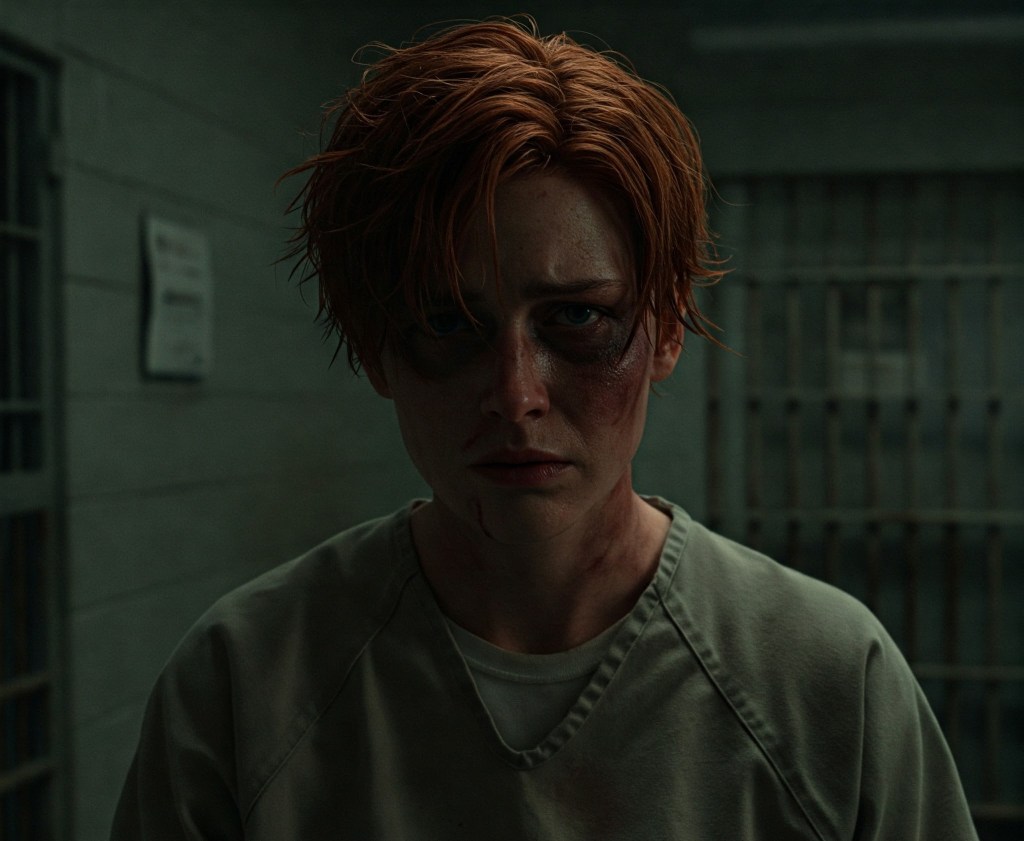
Tina Farmer is a trans woman currently incarcerated in one of the most notorious prisons in the country—Blackwood Correctional Facility, also known by inmates as “Sodom.” Her crime was nonviolent, and she should have served time in a minimum-security facility. But a hard-right judge had other plans, and Tina’s been living a nightmare ever since. Now she’s about to be shipped off to a private prison in El Salvador—La Aguja Negra, a place inmates call “The Black Needle.” This is her story, in her own words. The following interview was conducted via a monitored correspondence system and edited for clarity and length.
Q: Tina, can you share why you ended up in prison?
TINA: I wrote a check I couldn’t cover. $1,287.32, to be exact. It was for my rent and some groceries. I was two months behind, my power was about to be shut off, and I had nothing left. No family to ask, no church that would help me, no programs that didn’t come with strings. It wasn’t some big scam. It was survival. I pled guilty, expecting probation. Even the prosecutor was fine with that.
But then I met Judge Vickerman. He took one look at me—lip gloss, earrings, blouse—and decided I was “deluded.” He said I was “mocking the court” and told me right there in open court that he was going to “make a man out of me.” I wasn’t sentenced for my crime. I was sentenced for being trans.
Q: You were sent to Blackwood—nicknamed Sodom. What was it like arriving there as a trans woman?
TINA: Hell. It’s like being dropped into a pit where your very existence is offensive. The guards saw me as less than human. Some of them—like Officer Langley—made it a game to see how far they could push me before I’d snap. Strip searches weren’t about security. They were about humiliation. Mercer, the warden, pretended to be neutral, but that man has blood on his hands. He told me to my face that hormones weren’t a medical necessity. As if it was just about pills. As if watching your body slowly revert, becoming more masculine each month, isn’t a kind of psychological torture.
Q: Did you ever feel safe inside? Even for a moment?
TINA: Only when Ghost was alive. He was… complicated. When we first met, he made it clear the price of protection. I said yes because I had to. But something shifted between us. He stopped taking. We started talking. He told me about his life before all this—he had a daughter, once. He showed me a picture he kept hidden in a hollowed-out book. She had his eyes.
Ghost was brutal to everyone else. But not with me. He looked out for me. And in here, that’s not nothing. It’s love, even if it’s bruised and bloodstained.
Q: What happened to him?
TINA: He got stabbed in the cafeteria. They said it was a fight over cornbread, which is bullshit. He barely got nicked. But he was gone within a day. They said it was an infection. I say it was something else—maybe poison, maybe something injected when he was unconscious. He knew things about the cartels working inside Blackwood. He told me once that Mercer was in deep with them. That some of the guards were making more off the books than they were on payroll. When Ghost started asking questions, he died. That’s how it works in here. Silence is safer than truth.
Q: And now you’re being transferred. Why?
TINA: They say it’s to ease overcrowding. Mercer signed a deal to send 60 of us to La Aguja Negra in El Salvador. But let’s be real: I’m being disappeared. They’re sending the people they see as problems—troublemakers, snitches, people like me. La Aguja Negra isn’t a prison, it’s a graveyard. No oversight. No medicine. No escape. Once you’re there, you vanish.
I’ve filed every appeal I could. I wrote to the governor. I wrote to the ACLU, the Transgender Law Center, even the UN Human Rights Commission. No response. I’ve been told in not so many words that “some people aren’t worth the trouble.” I know what that means.
Q: What do you want people to understand about what’s happening to you?
TINA: That this isn’t about one trans woman and one prison. This is about a system that’s fine sacrificing the most vulnerable so the powerful can stay comfortable. I didn’t hurt anyone. I was trying to live. And for that, I’m being thrown into a foreign prison where I might not even last a week.
But I’m still here. I’m still Tina. They’ve tried to take that from me—my name, my body, my hope—but I’m still here. And if you’re reading this, maybe I’m not alone.
Q: Final question. What gives you hope, if anything?
TINA: Some nights, I still hear Ghost in my dreams. He used to say, “Don’t let them write your ending.” That sticks with me. Maybe I can’t stop what’s happening to me, but I can leave this behind. I can tell my truth. And maybe someone out there will hear it, and do something. Maybe not for me. But for the next girl like me.
If Tina’s story moved you, please share it. Organizations like the Transgender Law Center, Lambda Legal, and Black & Pink are doing the work to protect incarcerated LGBTQ+ people. They need your support.Tina Farmer is scheduled for transfer to La Aguja Negra on April 23rd. She may not survive. But her story doesn’t have to die with her.
I'm a professional writer, mainly fiction, with over twenty novels to my credit. Along with fiction, I've been writing SEO content since 2013. I'm from the Richmond, Virginia. Currently, I live in Mexico.
View all posts by Ian O. Lewis


 Ian O. Lewis and Luke Jameson